Resume Trends 2027: What Changed and What to Fix Before You Apply
A resume that won interviews two years ago can now sit unread. The document did not get worse. The way employers read it changed.
Applications per role have roughly tripled since 2021, and a single opening often draws more than 300 candidates, according to recruiting platform data cited by Built In. Employers answered that flood with software. In a Resume Genius survey of 1,000 US hiring managers, 79% said their company has automated at least part of hiring.
So your resume now has two readers: a system that sorts and ranks, and a person who gives the top of the pile a few seconds each. The six trends below show what both readers want in 2027, and the checklist at the end turns them into an afternoon of edits.
Trend 1: Screening software reads for meaning, not keyword counts
Keyword stuffing no longer works, because modern applicant tracking systems (ATS) match on context. They recognise synonyms, so "stakeholder management" and "stakeholder coordination" count as the same skill. Repeating the exact phrase from the job advert five times adds nothing, and it makes your bullets harder for a human to read.
The old fear that a robot deletes your resume is also out of date. Most tools rank candidates for a recruiter to review. In the Resume Genius survey, 32% of hiring managers said AI recommends or ranks candidates while people make the final call. Only 6% said AI can advance or reject candidates with limited human review.
Your aim is to rank high, and context is what lifts a ranking.
What to do
- Put each skill inside an achievement. Write "Cut month-end close from 8 days to 5 by automating reconciliations in Excel and Power Query" in place of a bare list that reads "Excel, Power Query, reconciliations".
- Use the job advert's wording once, where it is true, and write the rest in natural language.
- Never hide white text or invisible keywords in the file. Recruiters can reveal it by selecting all the text, and it reads as manipulation.
For a worked example of this approach, see how to write a finance CV that passes ATS screening.
Trend 2: Skills come first as degree requirements fade
Employers now screen on what you can do before they look at where you studied. In a TestGorilla survey of 1,084 hiring decision makers, 85% said they use skills-based hiring and 53% said they have dropped degree requirements, as reported by Pin. The survey is vendor sponsored, so treat the exact figures with care, but other data points the same way. In the Resume Genius survey, 86% of hiring managers valued relevant work experience above formal education, and 82% said a certification can be worth as much as a bachelor's degree.
What to do
- Move education below experience unless you graduated in the last two years.
- Replace the generic skills block with a short "Core skills" section of 6 to 10 skills that match the role, then prove each one in your experience bullets.
- List certifications with the issuing body and year. If you are choosing one, compare the options in certifications that pay.
- If you are changing careers, lead with transferable results. In the same survey, 85% of hiring managers said they judge career changers on skills and readiness, not on having held the same job title.
This shift matters most for early-career applicants, who face the tightest market. We covered why in entry-level jobs are shrinking.
Trend 3: AI literacy becomes an expected line on every resume
AI skill is no longer a bonus reserved for tech roles. Gartner predicts that by 2027, 75% of hiring processes will include certifications or tests for workplace AI proficiency, as cited by Gloat. The pay signal is just as clear: PwC's 2026 AI Jobs Barometer reports a 62% average wage premium for AI skills, according to Analytics Insight.
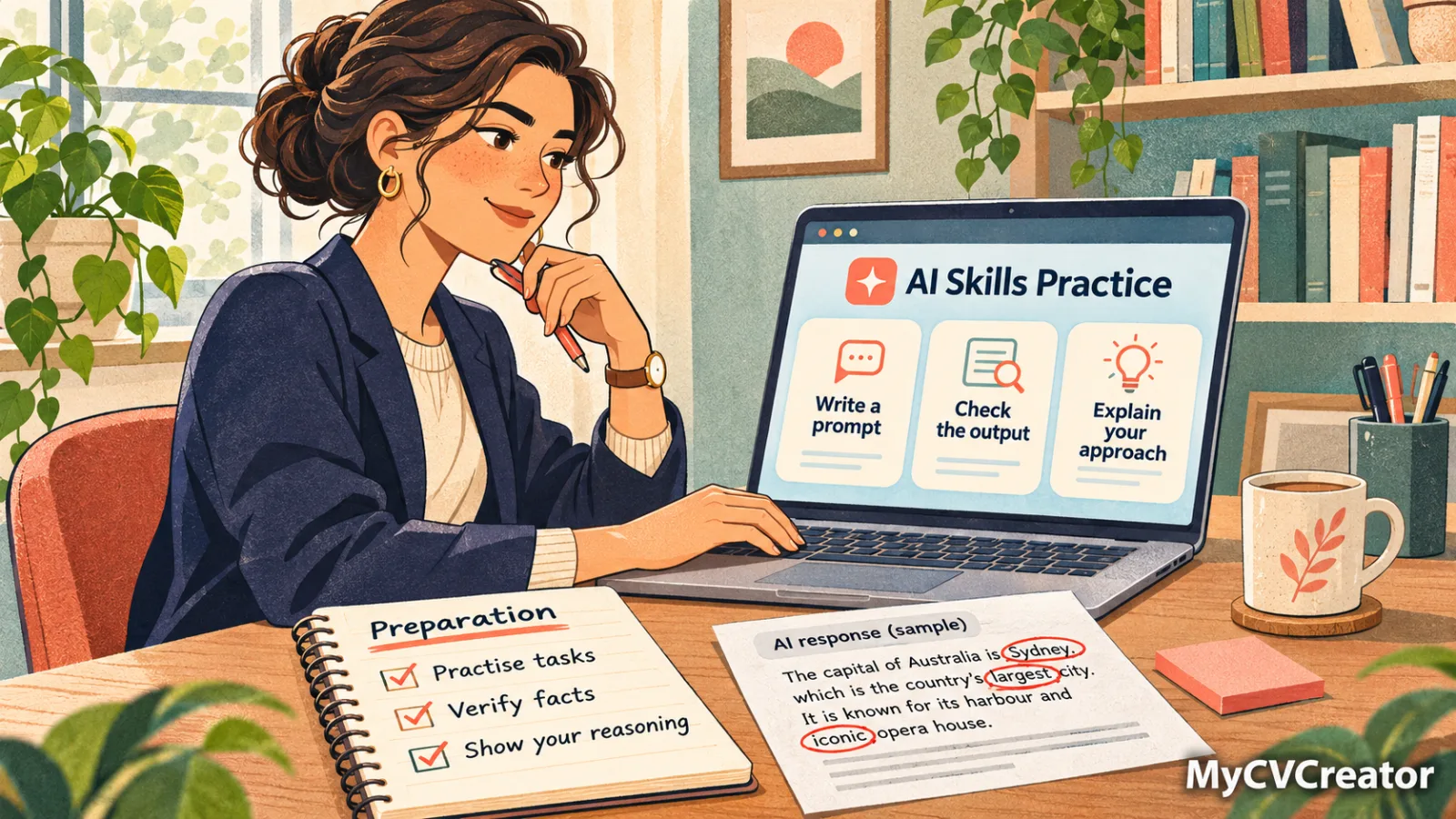
Employers are not asking everyone to build models. They want people who can pick the right tool, check its output, and protect company data while using it.
What to do
- Name the tools you use and the task you use them for. "AI tools" on its own tells a recruiter nothing.
- Show judgment as well as speed. Example: "Drafted weekly client reports with Copilot and verified every figure against source data, cutting preparation time from 4 hours to 90 minutes."
- Add any AI course or certificate you have completed, with the provider and date.
- Do not claim tools you have not used. If a proficiency test is part of the process, the gap will show.
The same technology is now running the interview stage too. Read how AI automated interviews and screening work before your next application.
Trend 4: AI-written resumes are everywhere, so specifics win
Using AI to draft your resume is now normal, and recruiters know it. In the Resume Genius survey, 77% of hiring managers said many resumes look partly or fully AI generated, and 80% said they can spot one. The signs they named were unnatural phrasing, repeated language, vague descriptions, heavy buzzwords, and grammar that is a little too perfect.
The problem is not the tool. It is that thousands of applicants paste in the same prompt and submit near-identical documents. When every summary says "results-driven professional with a proven track record", none of them stands out.
What to do
- Use AI for structure and a first draft, then rewrite every bullet with facts only you have: the number, the client type, the tool, the deadline.
- Read the resume aloud. Delete any sentence you would never say in an interview.
- Cut filler words such as "spearheaded", "leveraged", "dynamic", and "passionate".
- Keep one small, real detail per role. "Trained 14 new cashiers across three branches" is hard to fake and easy to remember.
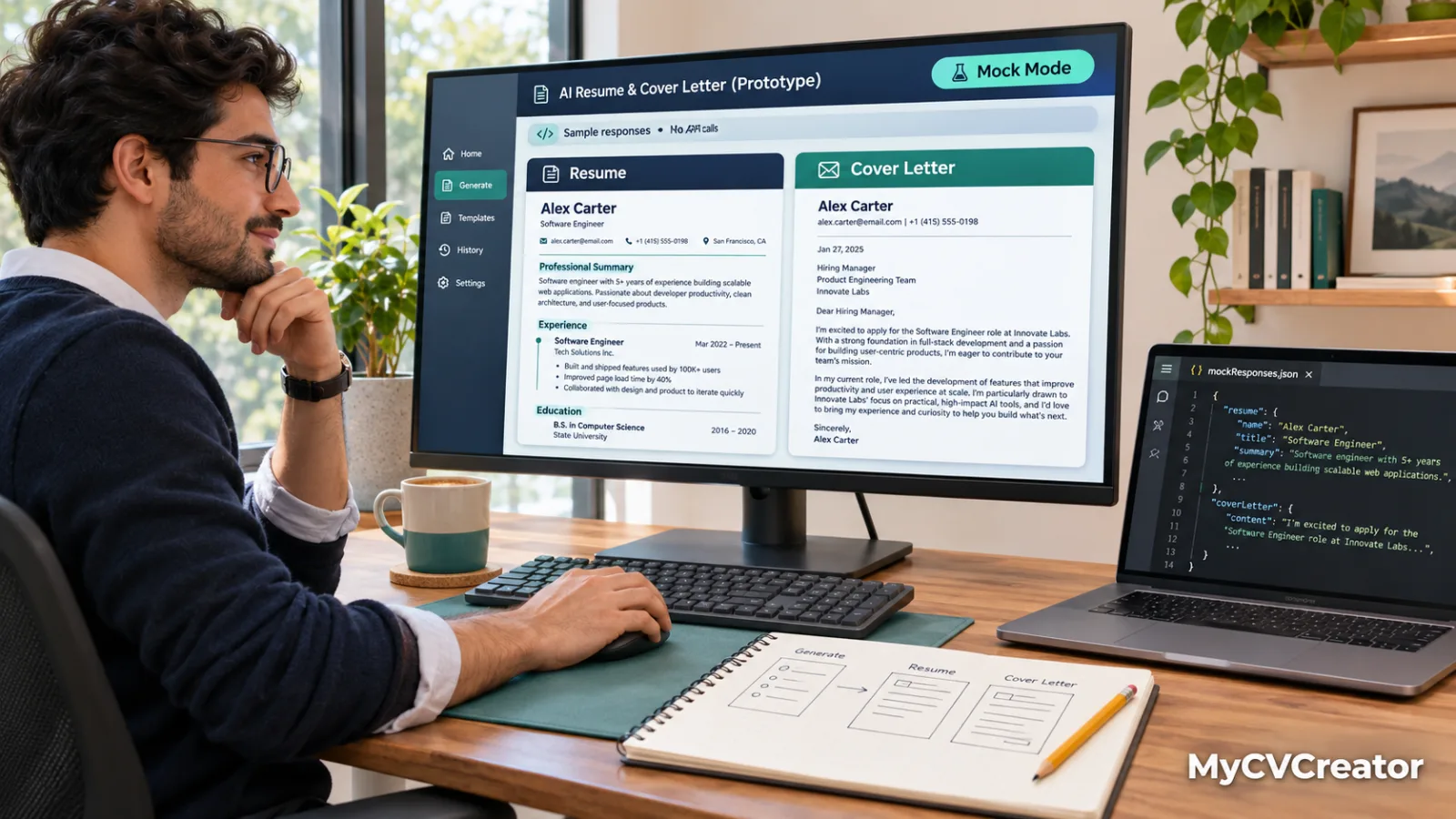
The MyCVCreator resume builder gives you the structure, and your own numbers supply the rest.
Trend 5: Employers want proof that you are real
When text is cheap to generate, employers look for signals that are harder to fake. Recruiters now deal with fabricated profiles and even deepfake candidates, a problem we explained in prove you are real: deepfake candidates and identity verification. A resume that connects to verifiable evidence earns trust faster.
What to do
- Add a LinkedIn URL that matches your resume on job titles and dates. Mismatches are a common red flag.
- Link to proof of work where your field allows it: a portfolio, GitHub profile, published article, or case study.
- Use a professional email address and a phone number you answer.
- Record a short video resume. Sixty to ninety seconds of you explaining who you are and what you have delivered shows communication skill, which hiring managers in the Resume Genius survey ranked as the most valued skill of all.
You can record and share one with the MyCVCreator video resume tool, then place the link beside your contact details.
Trend 6: Clean formatting beats clever design
A plain, single-column resume is the safest choice in 2027. Multiple columns, tables, text boxes, and graphics can scramble when software extracts your details, and hiring managers in the Resume Genius survey said design-heavy resumes with images often fail to parse. Text-based PDFs and Word documents work best.
What to do
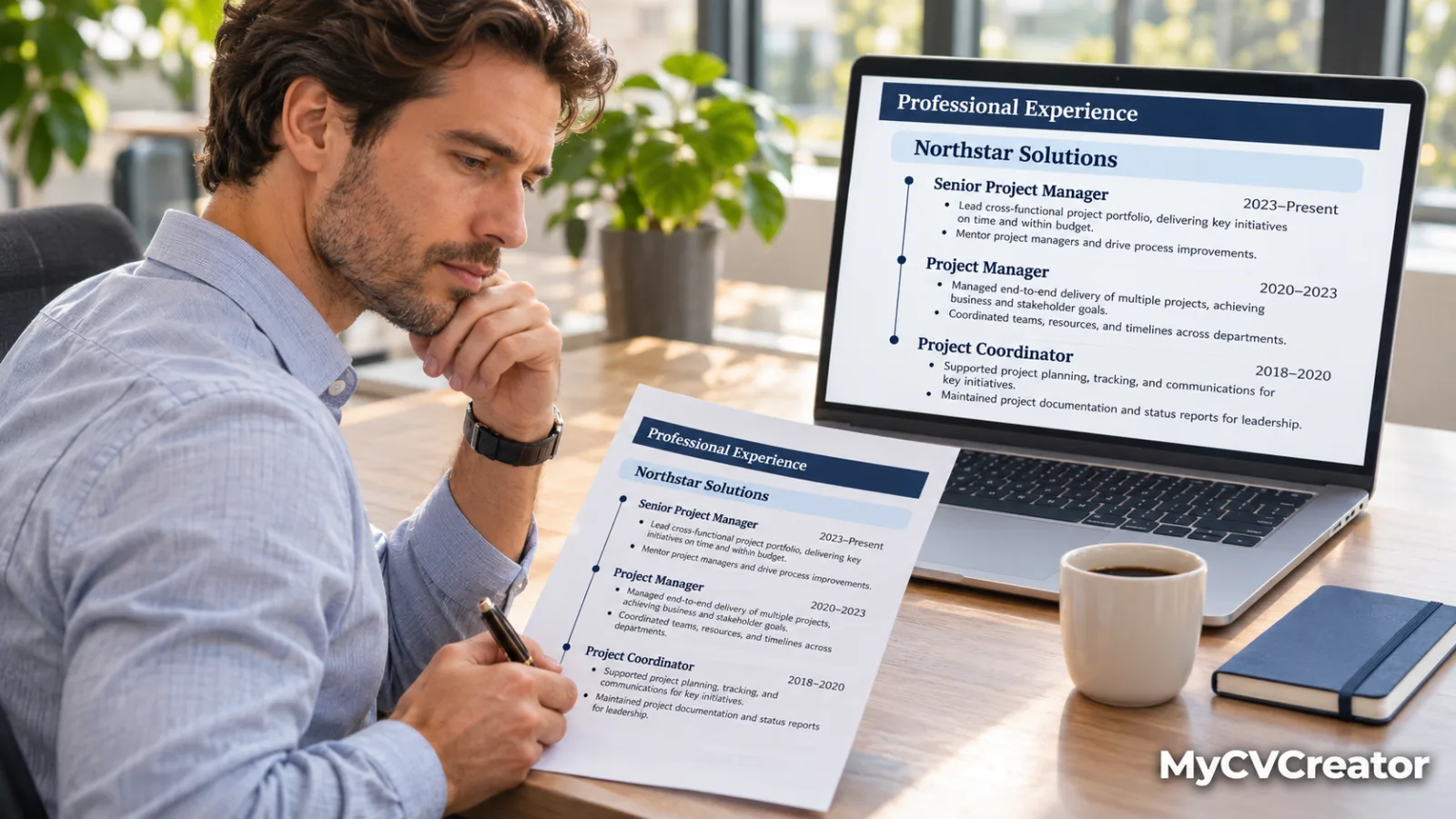
- Use one column with standard headings: Summary, Experience, Skills, Education, Certifications.
- Choose a common font such as Arial, Calibri, or Georgia at 10.5 to 12 points.
- Remove skill bars, star ratings, icons, and photos unless the country you are applying in expects a photo.
- Save as a text-based PDF unless the advert asks for Word. Test it by copying the text into a blank document. If it pastes in the right order, software can read it.
- Keep to one page with under 10 years of experience and two pages beyond that.
What to remove from your resume in 2027
Cutting is the fastest upgrade. Each item below either wastes space or confuses a parser.
Remove | Replace with |
|---|---|
Objective statement ("Seeking a challenging role") | A 2 to 3 line summary: your role, years of experience, and best result |
"References available on request" | Nothing. Employers ask when they need them |
Full home address | City and country, or city and state |
Skill bars and star ratings | A plain skills list proven in your bullets |
Duty lists ("Responsible for") | Results with a number, a tool, or a timeframe |
Jobs older than 15 years | One line under "Earlier experience" |
Buzzwords such as "hardworking team player" | A specific example of the trait in action |
Your 10-point resume checklist for 2027
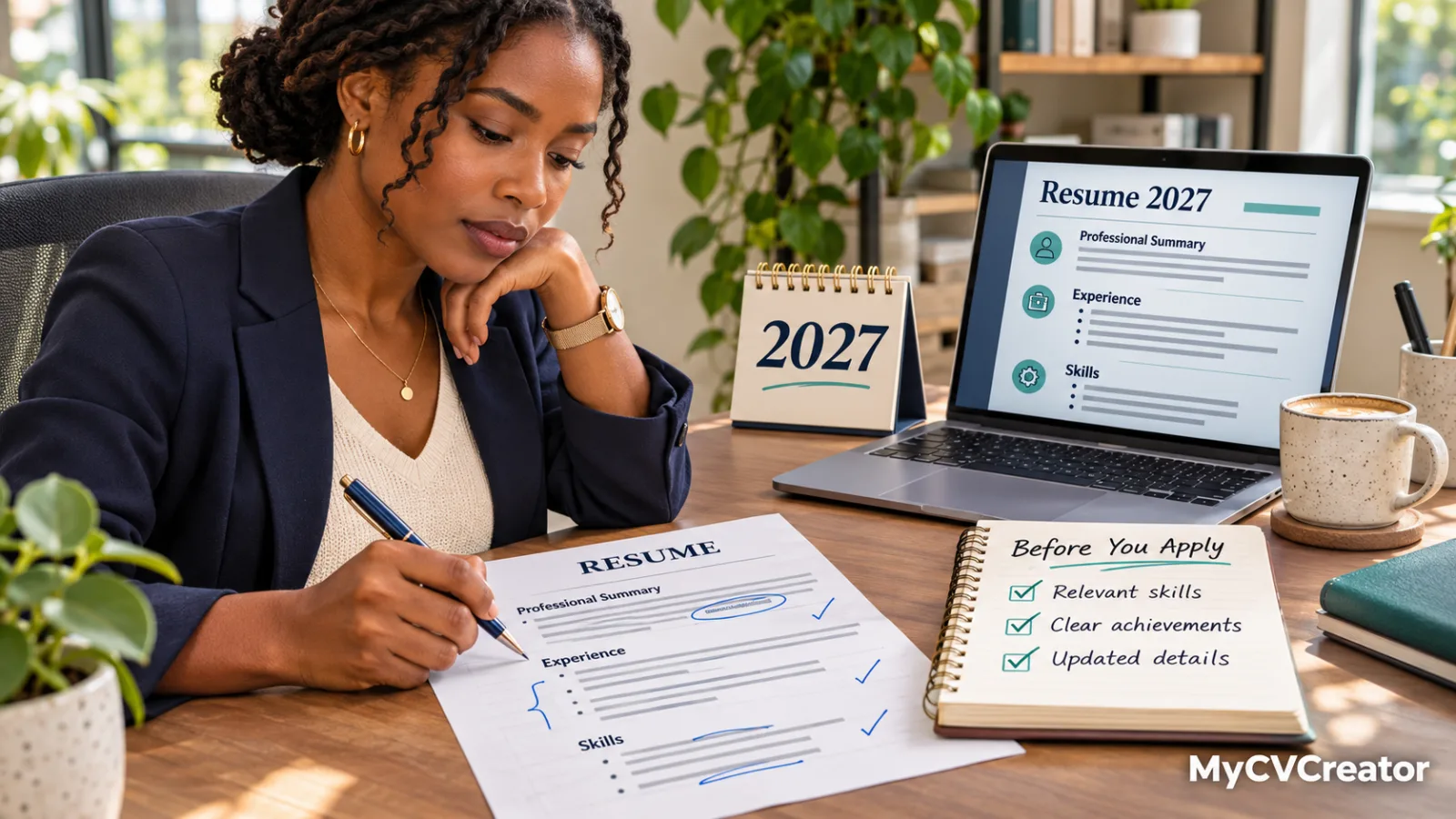
Work through this list once and your resume is ready for the January hiring surge.
- The layout is one column with standard section headings.
- The summary states your role, years of experience, and strongest result in three lines or fewer.
- Every experience bullet starts with an action and ends with a result.
- At least half of your bullets contain a number.
- Your 6 to 10 core skills match the advert, and each one appears in a bullet as proof.
- One or more bullets show how you use AI tools, with the tool named.
- Certifications list the issuer and the year.
- Your LinkedIn URL is included and its dates match the resume.
- A portfolio or video resume link sits beside your contact details.
- The file is a text-based PDF that passes the copy and paste test.
Many employers open new roles in January as annual budgets reset. For more on timing your applications, see how to use the fall hiring window. Once the offers arrive, prepare with how to negotiate salary in the US.
Frequently asked questions
What is the best resume format for 2027?
The reverse-chronological format in a single column remains the best choice. It lists your most recent job first, which is the order both screening software and recruiters expect.
Do ATS systems automatically reject resumes?
Rarely. Most systems rank and organise candidates for a human to review. In one survey of 1,000 US hiring managers, only 6% said AI can reject candidates with limited human review. A low ranking still means few people see your resume, so relevance matters.
Is it okay to use AI to write my resume?
Yes, as a drafting aid. Most hiring managers say they can recognise an unedited AI resume, so rewrite the draft with your own numbers, tools, and details before you send it.
How long should a resume be in 2027?
One page for under 10 years of experience and two pages for more. Academic, medical, and some international CVs can run longer.
Should I include AI skills if I am not in tech?
Yes. Employers in finance, healthcare, marketing, and operations now expect basic AI literacy. Name the tool, the task, and how you checked the output.
Do I need a video resume?
It is optional, but it helps in client-facing, sales, media, and remote roles where communication is the job. Keep it under 90 seconds and link to it from your resume.
Update your resume before January
The 2027 resume is plain in design, specific in content, and backed by proof. Start with the checklist above, then build your updated version with MyCVCreator and add a video resume to stand out from the stack.