AI and Automated Interviews: The Screening Stack, Explained
Our guide to one-way video interviews covered the format that surprised a generation of candidates: record yourself answering questions with no human on the other end. That format has not gone away. It has been joined by three more AI-driven screening stages that now sit between your application and your first human conversation, and most candidates walk into all of them blind, because nobody warned them the "recruiter" calling might not be a person, or that a WhatsApp conversation could be a scored interview.
Talent teams now use AI somewhere in their hiring workflow at very high rates, and the reason is blunt: a recruiter screening candidates manually can burn most of a full workday per hire on first-round calls alone, and AI tools compress that dramatically. The result is a genuine 2026 screening stack: a layered sequence of automated stages, each testing something different, each beatable once you know its rules. This guide covers all four layers, in the order you are likely to meet them, what each one actually evaluates, and how to perform well without ever needing to guess whether you are talking to a person.
The Four Layers of the Modern Screening Stack
1. Conversational text screening: a chatbot, often deployed over SMS, WhatsApp, or a website chat window, asks qualification and knockout questions immediately after you apply, sometimes within seconds. This is now common at large, high-volume employers, precisely because it engages candidates the moment they apply rather than making them wait days for a callback.
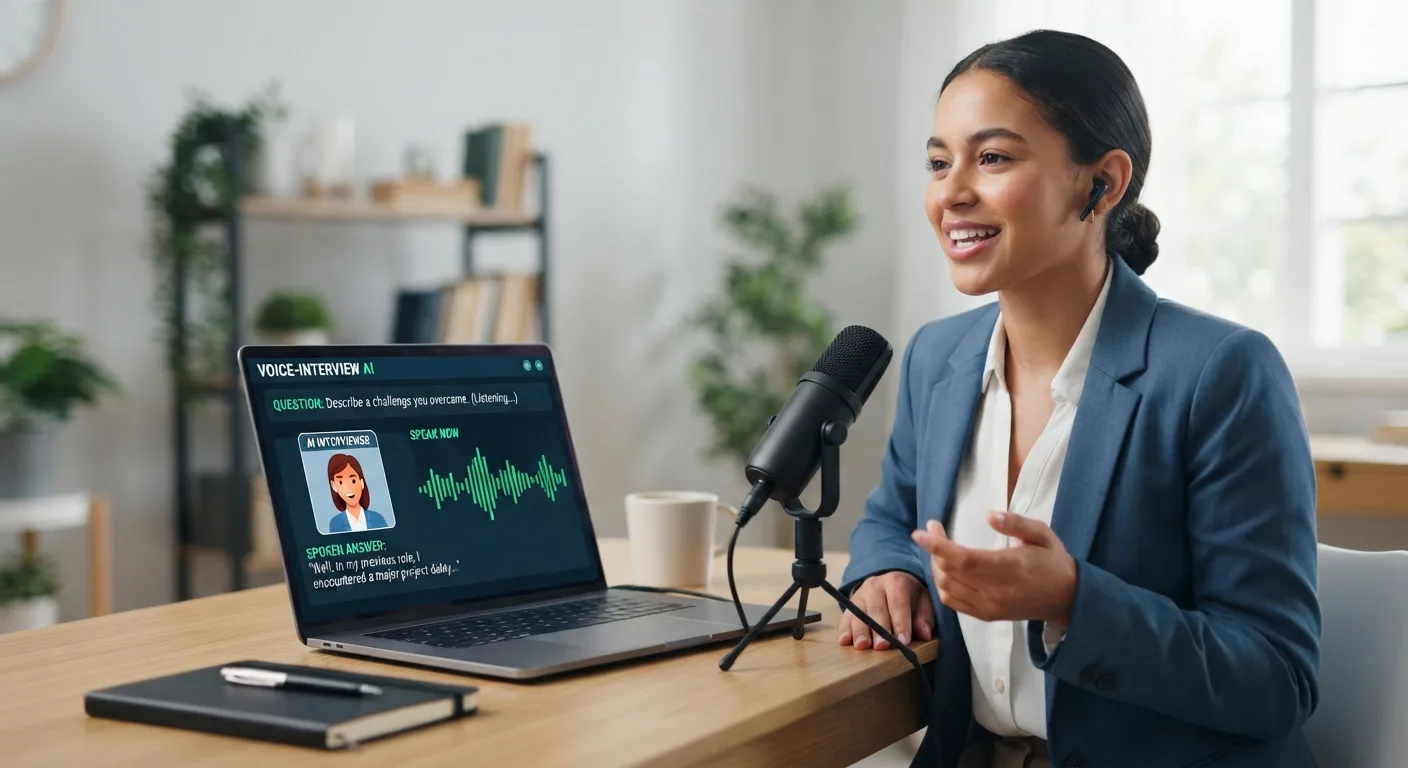
2. AI voice screening: software calls you (or you call in), holds a real-time spoken conversation using synthesized voice and speech recognition, asks structured questions, and scores your answers, all without a human on the line. It is spreading fast because it captures things text cannot: tone, clarity, composure, and genuine spoken communication skill, which matter heavily for client-facing and service roles.
3. One-way (asynchronous) video interviews: the format our companion guide covers in full: recorded answers to on-screen questions, reviewed later by humans, software, or both.
4. Game-based and skills assessments: short interactive exercises measuring cognitive ability, problem-solving, or job-specific skills, often bundled into the same platform as the video or voice stage.
Large employers increasingly stack two or more of these before a human ever joins a call, and it is now common for a platform to also run automated proctoring during live virtual interviews, using your camera to flag irregular behavior. None of this is a verdict on you personally; it is capacity management at scale, and every layer has a learnable shape.
Layer 1: Chatbot and Text Screening (WhatsApp, SMS, Web Chat)
What it is: immediately after applying, you receive a text or chat message from an AI assistant asking a short series of questions: availability, basic qualifications, sometimes the exact knockout questions covered in our ATS knockout guide. Some employers even let you apply by texting a keyword to a shortcode, with the entire initial screen happening inside the chat thread that follows. This channel is now especially common in retail, hospitality, logistics, and other high-volume hourly hiring, so if you are working through our Amazon warehouse or similar guides, expect it.
How to perform well:
- Respond promptly. These systems are built for speed, and slow replies can cost you your place in a fast-filling schedule the same way slow shift-claiming does in warehouse hiring.
- Answer exactly what is asked, honestly and completely, the same discipline our application form guide teaches, because these are frequently the same legally binding qualification questions in a different interface.
- Write in full, clear sentences, not heavy text-speak; the system is often parsing your words for content, and clarity reads as professionalism to any human who later reviews the transcript.
- Save the thread. If it later schedules an interview or makes commitments, you want the record.
Layer 2: AI Voice Interviews (The Phone Call That Is Not a Person)
What it is: an AI agent calls your phone, or you call a number, and holds a spoken, largely natural-sounding conversation: structured questions, real-time follow-ups based on your answers, and immediate scoring. Adoption is growing quickly because it replaces the traditional recruiter phone screen almost entirely for high-volume roles, cutting screening time dramatically while still capturing spoken communication signals that a text chatbot cannot.
How to tell you are likely talking to an AI: a voice that sounds slightly too smooth or evenly paced, questions that arrive with unnaturally consistent timing, an assistant that introduces itself by a product-sounding name, or a call that opens by stating it is an automated interview (increasingly required by law in a growing number of jurisdictions, so listen for that disclosure). If you are unsure, it costs nothing to ask directly, "Am I speaking with an AI assistant?"; a legitimate system will tell you.
How to perform well:
- Treat it exactly like a real phone screen, because it is scored like one: quiet environment, full attention, no distractions, professional greeting.
- Speak clearly and at a measured pace. Speech recognition systems, like human listeners, follow clarity better than speed; the same guidance our one-way video guide gives about slowing down 10 percent from your natural pace applies here with even more force, since there is no video to carry meaning if a word is missed.
- Answer completely; do not wait for a human warmth cue that will not come. These systems evaluate content and clarity, not charm, so a complete, structured answer beats a charming, vague one.
- Have your key facts ready (availability, basic qualifications, your elevator pitch) exactly as you would for a human screen, because the questions are frequently identical.
- If it cuts you off or mishears you, stay calm and simply restate; composure under a technical hiccup is itself a positive signal, on this call as on a recorded video one.
Layer 3: One-Way Video (Already Covered, Now Frequently Combined)
The full playbook, setup, and delivery guidance lives in our dedicated guide: camera at eye level, front lighting, STAR answers compressed to 60 to 90 seconds, eyes on the lens. What is new in the 2026 stack is that this stage increasingly arrives bundled with a voice or chat screen before it and a skills assessment alongside it, on the same platform, in the same sitting. Two additions worth knowing for the combined experience:
- Some platforms now run proctoring during live virtual interviews too, using computer vision to flag irregular behavior such as a second face entering frame or prolonged looking away from the screen; keep your space private and your attention visibly on the interview for the same reason you would in an exam hall.
- AI content scoring increasingly assesses communication clarity and structure directly, not just keyword presence, which means the STAR-structured, front-loaded answers our video guide teaches score well with both a skimming human and a language-aware system, for the same reasons covered in our ATS 2.0 semantic matching guide.
Layer 4: Game-Based and Skills Assessments
What it is: short interactive exercises, sometimes styled like simple games, measuring cognitive patterns, problem-solving, attention, or role-specific skills (a mock customer call, a data task, a coding challenge), often bundled right into the same platform as your video or voice interview.
How to perform well:
- Read every instruction fully before starting; these are frequently timed, and misreading the task costs more than a genuinely wrong answer.
- Practice the format, not the content, if a practice round is offered; familiarity with the interface itself measurably improves scores, since part of what is tested is comfort under the format's pressure.
- Do not overthink puzzle-style sections; they typically measure consistent reasoning patterns rather than one correct trick, and second-guessing costs time you may need later in the assessment.
- For skills tests tied to your actual field (a written sample, a spreadsheet task, a mock call), treat it exactly like real work: your best genuine effort, not a performance for an invisible grader.
What This Means for Your Preparation, Overall
Prepare your core material once, and it serves every layer. The same STAR-structured stories, the same clear statement of availability and qualifications, and the same calm, complete communication style work whether you are typing to a chatbot, speaking to a voice AI, recording to a camera, or finally talking to a human. Build it once, per our complete CV and interview preparation habits, and you are ready for whichever layer arrives first.
Consistency across every stage matters more than performance in any single one. Because these systems increasingly write results back into a shared candidate record, an inconsistency between what you told the chatbot, the voice AI, and the video platform is more visible to whoever reviews the whole file than it would be in three separate manual conversations. Answer the same way, truthfully, every time.
None of these systems replace the knockout mechanism; they often run it earlier and faster. A disqualifying answer inside a WhatsApp chat screen ends your candidacy exactly as fast as a wrong checkbox on a form, sometimes within the same minute you applied, exactly the speed-as-diagnostic signal our knockout questions guide teaches you to read.
Legitimate automated interviews always disclose themselves eventually, and never ask for money. A growing number of jurisdictions now legally require employers to tell you when AI is involved in evaluating you; if a "screening call" or "interview" pressures you for fees, banking details, or purchases at any stage, treat it exactly like the scam patterns in our job scam red flags guide, because legitimate AI screening tools, however strange the format feels, never do that.
For international candidates: every advantage from our one-way video guide applies with more force across this whole stack. Text and voice screening remove timezone friction entirely (a chatbot or voice system runs whenever you reply, and many operate in multiple languages), and the composure and clarity that serve you on a recorded video serve you identically on an AI phone call. Keep your one calm context line (relocation, authorization) ready to state plainly whenever a screening stage asks an open question about your situation.
AI Screening Stack FAQ
How do I know if I am talking to an AI during a phone interview? Listen for an opening disclosure (increasingly legally required), unnaturally even pacing, or a product-style introduction, and feel free to ask directly; legitimate systems will confirm.
Is it worth taking an AI chatbot screening seriously if it is "just a bot"? Completely; it scores and routes your candidacy exactly like a human screen would, often deciding within minutes whether you proceed. Treat every layer of the stack as a real interview.
Do AI voice interviews judge my accent? They are built to assess clarity and content rather than accent, but clarity itself is what to optimize: a measured pace and complete sentences serve you here exactly as they do in the video format.
What happens if the AI voice system mishears or interrupts me? Stay calm and restate your answer; composure under a technical hiccup reads as a positive signal, not a failure, on both AI-scored and human-reviewed stages.
Can I ask to skip the AI stages and speak to a human? Sometimes, though for high-volume roles the automated stages are usually mandatory gateways to reach a human at all. A referral or direct outreach to a hiring manager, covered in our job boards strategy guide, remains the most reliable way to bypass the stack entirely.
Are these AI interview tools legal, and do I have rights? Yes, and increasingly regulated: a growing number of places now require disclosure that AI is being used to evaluate you, and some restrict certain scoring practices. If something feels undisclosed or coercive, that is worth noting and, where relevant, questioning.
Should I prepare differently for text, voice, and video AI screening? The core material (your qualifications, your STAR stories, your availability) is identical across all three; only the delivery channel changes, so one solid preparation session serves every layer of the stack.
One Stack, One Prepared Candidate
The hiring funnel now runs through more automated layers than it used to, but every layer is asking a version of the same question your resume already answers: are you qualified, clear, and consistent. Prepare your core material once, answer every stage the same honest way, stay composed through whichever channel greets you first, text, voice, camera, or game, and treat the whole stack as what it is: a faster, earlier version of the same interview you were always going to have.
Start the stack strong with the document every layer eventually checks against: a clean, consistent, ATS-ready resume, built free with MyCVCreator's resume builder.
Related reading:
One-Way Video Interviews: How to Pass Them ·
What Is an ATS Knockout Question? ·
How AI Reads Your Resume Now ·
Job Application Red Flags and Scams