
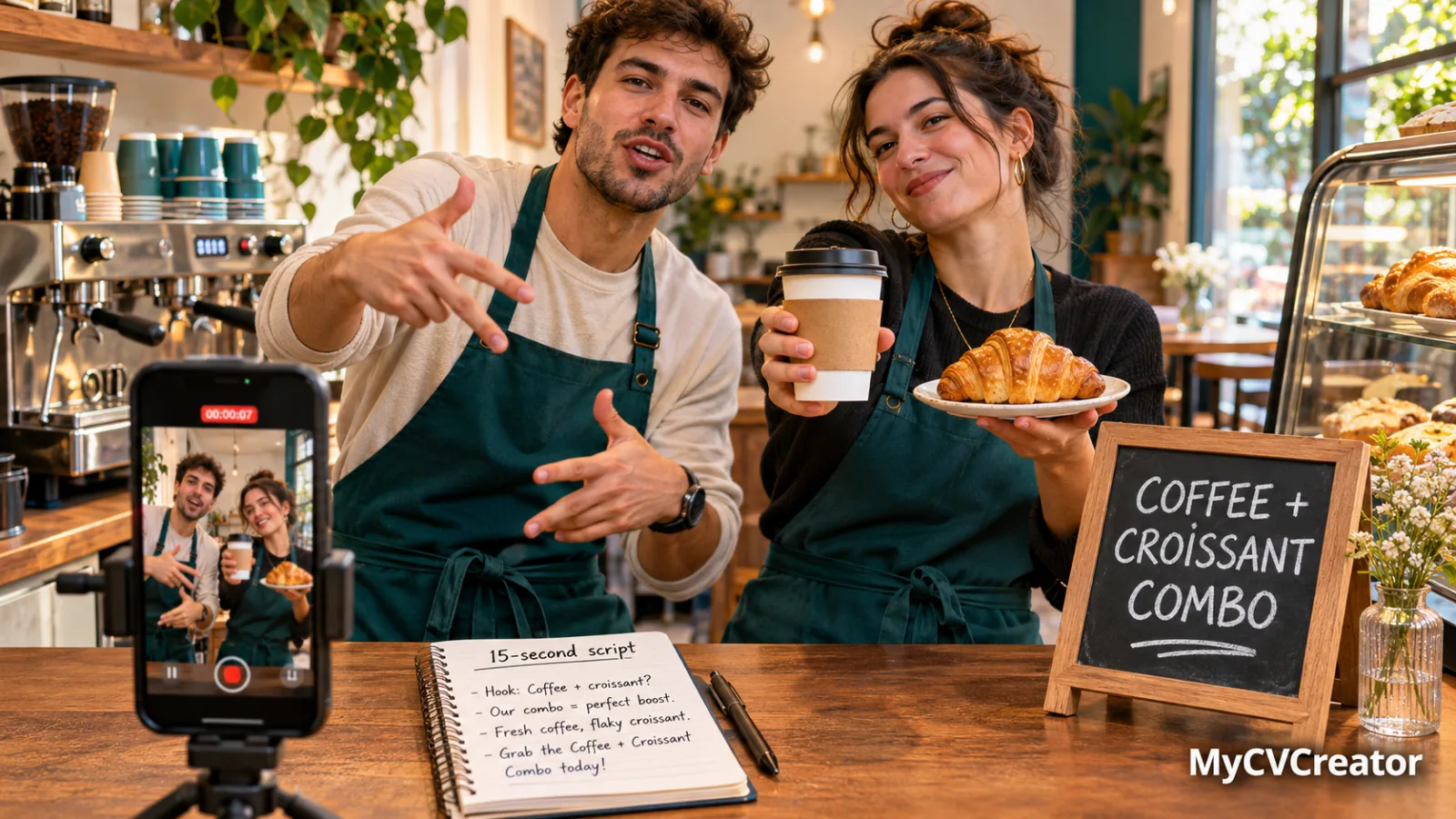
A Short Rap Clip for a Two-Person Shop, When the Line Has to Name the Offer
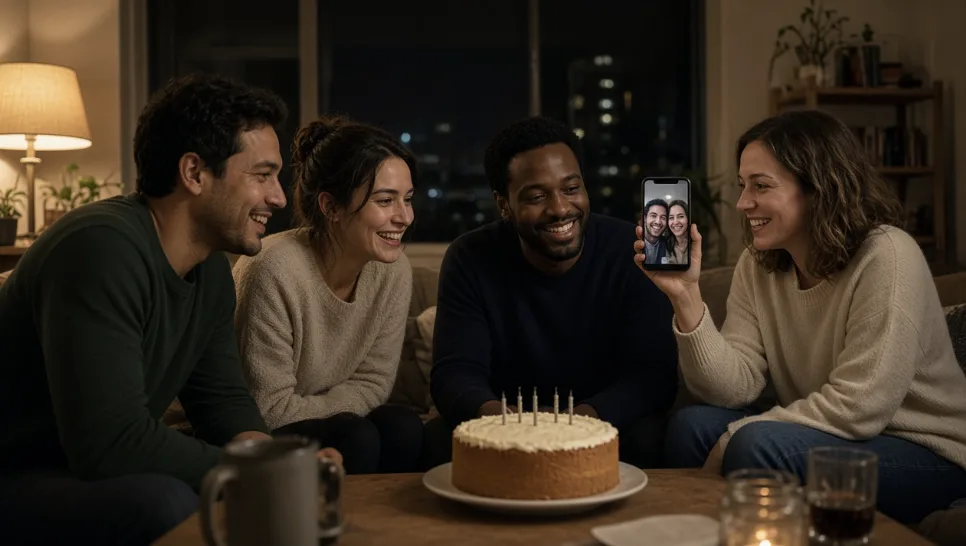
A two-person shop already has more photos than it has time. There is a birthday roast from Saturday and a still of both owners at the counter. When someone asks for a short clip for the shop profile, the wrong file is often the first one that comes to hand.
A party clip and a shop clip can use the same faces. They cannot use the same sentence. The party clip has to name the person. The shop clip has to name the offer the service, the place, or the thing a customer can act on. If the lyric only celebrates the owners, viewers will remember a pair of names and still not know what you sell.
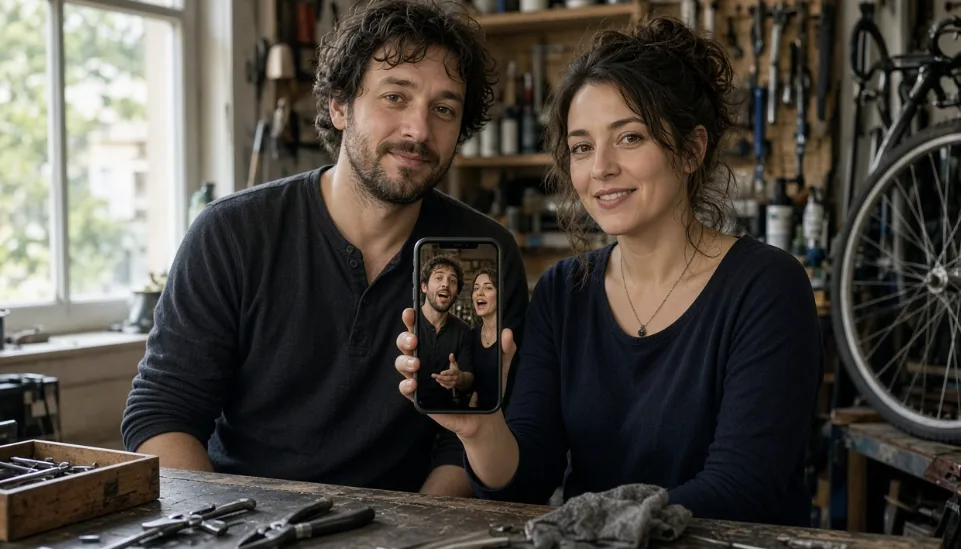
Hold the two jobs apart
Before you upload anything, decide which job you are doing: a greeting, or a short promo for the shop. The faces can be the same two people. The line cannot be copied from last week's joke.
A useful shop line leaves the viewer with something they can repeat: the repair, the street, the hours, the one thing you want them to do. "We are passionate about the neighborhood" is a mood. "We cut keys while you wait on King Street" is an offer. A clip of about five to fifteen seconds, with ten as a sensible default, can carry the second kind of sentence. It cannot carry a mission statement, and it should not be asked to.
The fact that made the party clip funny may be the fact that makes the shop look careless. A joke about being late is a bad way to sell a same-day repair. Write the shop line in a note that does not mention the party. If the only sentences you have are jokes, you are not ready to post this as a promo.
This is not a video resume, and it is not a substitute for a real film of the counter. It is a short clip that can sit where you already explain what you sell, without dragging a commercial recording that social platforms may mute.
What a photo-to-rap path can actually do
A photo to rap video path starts from stills rather than from a filming day. You upload one clear, front-facing photo, or two if both people should appear in the same short performance. For a two-person shop, two consented owner photos are often the right choice, but they are an option, not a precondition. If only one owner will appear, or a co-founder will not be on camera, one sharp still is enough.
The photos do not have to be taken together. Two partners who work different shifts can still share a short performance. A logo, a storefront, or a product shot is the wrong file for the face slot. The clip is a performance by the people in the photos. If customers need to see the product, that still belongs in a later frame you add yourself, or in the caption. Do not expect the generator to turn a wrench into a face.
On Hookai, you add a short theme the offer, in the language your customers actually use and generate a vertical video with a beat, generated vocals, and lip-sync created with the clip. The mouth movement is an approximation, so watch it before you post. If a render fails, you are not charged for that attempt. Lyrics and a track you bring yourself are planned; the current path is a photo, or two photos, plus a short theme.
The length is a choice, not a fixed format: five, eight, ten, twelve, or fifteen seconds. Do not stretch a one-line offer into a full verse just because the slider goes further. A scene is optional. A sidewalk business does not have to pretend it was filmed in a borrowed room.
Write one line a customer can repeat
Type the offer as you would write a caption you are willing to stand behind. Put the practical noun in the line: the service, the place, or the thing you sell. Leave slogans out. "Same-day bike repairs on King Street" can be understood on a phone. "Redefining access" cannot, and it should not be tried.
Pick one language for this clip, not half a sentence of each. If the shop is bilingual, choose the language of the customers you want this particular post to reach. The scene, if you use one, will not translate the offer. Only the line will.
Keep the claim true. Do not advertise a wait time you cannot keep, a street you have left, or a service you only wish you offered. A short rap clip will not rescue a line that would already fail on a printed sign. If you are unsure, read the sentence to someone who has never visited the shop and ask what you sell. If they cannot answer, the line is not ready, and another render will not invent the missing noun.
Name the owners only if they have agreed to be named. A clip that buries the offer under two first names has failed the job, even if both faces look sharp.
Use current photos, and get a yes
The stills should look like the people a customer would meet at the counter, not like a poster shoot. A clear, front-facing photo, in reasonable light, with the face unobstructed, will give the generator more to work with than a hat brim, a heavy filter, or a shot from above the display case. If the clip makes you look like a different pair, take a new still in the shop window before you try again.
Both people have to agree. A co-founder who hates being on camera is not a technical problem. Skip them, or wait. Using an old headshot they did not approve for a rap is the same permission miss as using a friend's selfie. Consent for a private chat is not the same as consent for a public shop profile.
Keep the files named for the job. A party still and a counter still should not share a filename you will mix up at the end of a long day. The tool will not label the download with your intention. You will. A mis-posted roast on a business page is the wrong job, published.
Check the offer after the render
When the file is ready, listen for the offer, not only for the beat. Did the street or the service survive. Did the faces still look like the owners. Check the lip-sync closely enough that it does not distract. If the offer dropped out, the line was too soft. If a face failed, the still was the problem. Do not post a shop clip that forgot what you sell. A birthday greeting can survive on a name. A promo cannot.
A failed render is not charged. A finished clip that buried the offer is a different case: the file completed, and the sentence did not do its job. Rewrite the line shorter and generate again only if the faces were fine. Two more attempts to chase a slogan is how a simple intro becomes an afternoon.
Show the clip to the people in it before it goes on the shop profile. If it feels off to them, it is off.
When you should just film
There are days when a phone at the counter is the better tool. If the point is the work itself the cut key, the finished repair, the line at the door a generated performance will feel like a substitute, because it is one. If both owners are in the shop and happy to appear, a ten-second take in the doorway will often beat a generated clip. If you already have a sharp video of the product, post that.
Use an ai rap video clip when you need a short, original soundtrack that will not be pulled for a commercial recording, when the two faces you want are not in the shop at the same time, or when one owner will allow a still and will not perform on camera. Use it next to the shop's real footage, not as a replacement for it. The stills and the rap can sit beside a photo of the work; they should not pretend to be the work.
A generated performance will not carry the noise of a busy hour. If that is the point, film. If the point is one true line a stranger can repeat after the clip ends, a photo or two and a tight offer are enough.
A closing check before you post
A two-person shop does not need a studio video. It needs a sentence a customer can act on, and faces the regulars will recognize.
Start with one or two consented, front-facing photos. Write one true line about what you sell, in the language of the people you want to reach. Keep the clip in the five-to-fifteen-second range. Watch the mouth, listen for the offer, and share it first with the people who appear. Keep the party roast in a different post, on a different day, with a different sentence. That is enough for a shop profile. It is not a film of the counter, and it does not need to pretend to be one.