
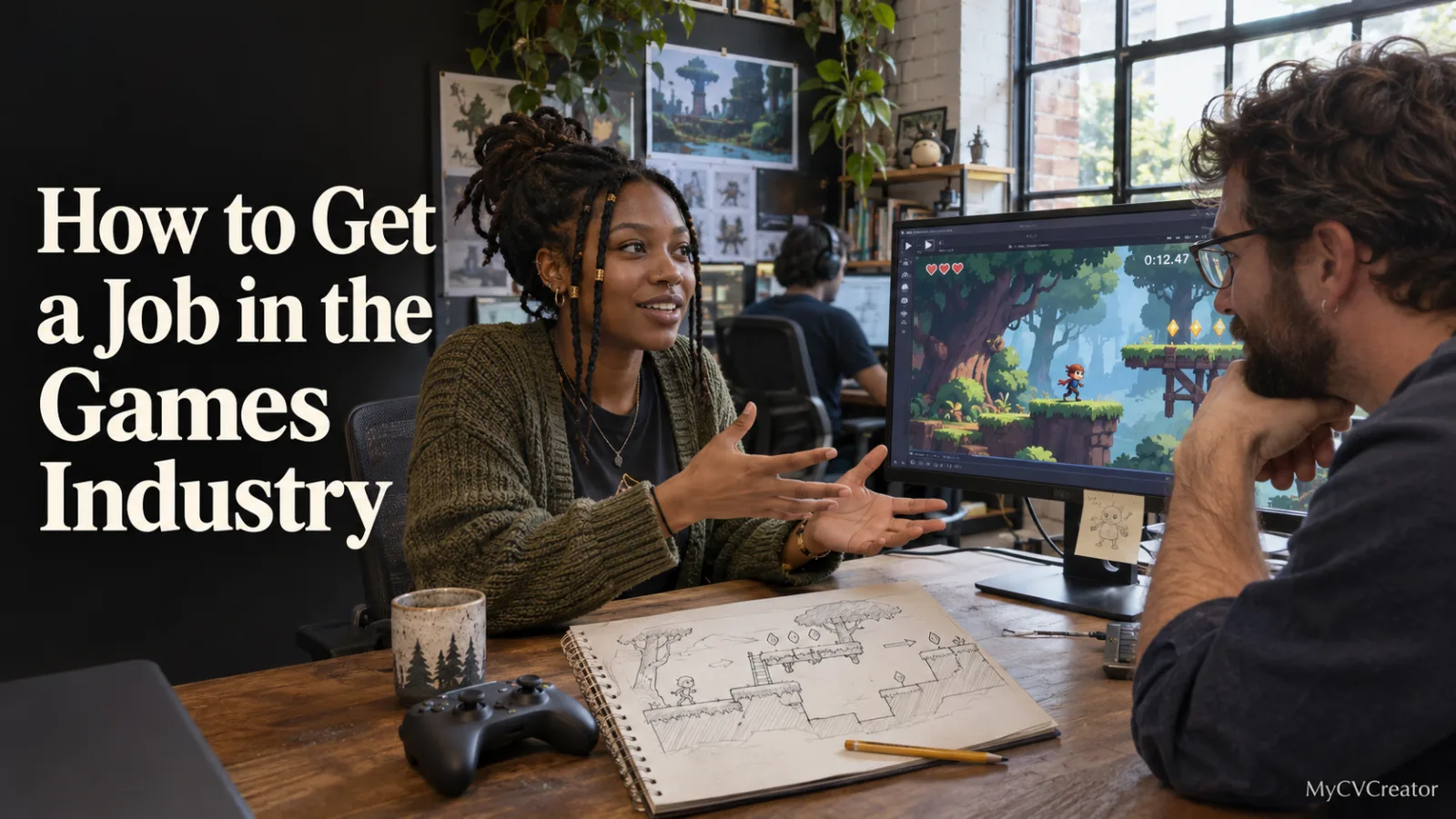
How to Get a Job in the Games Industry
The launch of GTA 6 has a lot of players wondering what it would take to work on a game like it. The answer: real skill, a strong portfolio, and patience, because the games industry is one of the hardest places to get hired right now.
The Game Developers Conference's January 2026 survey of more than 2,300 games professionals found that 28% had been laid off in the past two years, and almost half of those laid off said they had not found new work. GDC's November 2026 update put the figure at roughly one in three respondents. Big studios have been hit hardest: two-thirds of respondents at large studios reported layoffs at their employer, against one-third at indie studios.
That is the honest starting point. The good news is that people still get in every year, often through smaller studios, support roles, and growing markets such as Africa. This guide shows the roles, the routes, and how to present yourself.
The main jobs in games
Making a game takes far more than programmers. Most studios hire across these families.
Job family | Example roles | What you need to show |
|---|---|---|
Programming | Gameplay, engine, tools, network programmer | Code samples and small playable projects, usually in C++ or C# |
Art and animation | Concept, 3D, environment, character, technical artist, animator | A focused art portfolio |
Design | Game, level, systems, narrative designer | Playable levels or prototypes and design documents |
Audio | Sound designer, composer, audio programmer | A reel of sound work set to gameplay |
Production | Producer, project manager | Organisation, scheduling, and team coordination experience |
Quality assurance | QA tester, QA analyst, test automation | Attention to detail and clear bug reports |
Writing | Narrative writer, localisation | Writing samples, interactive fiction |
Community and marketing | Community manager, social media, marketing | Growth you have driven in an online community |
Business and support | Analytics, user research, HR, finance, legal | The same skills as in any industry, plus a love of games |
The last row is the most overlooked. Studios need finance, HR, legal, and data staff too, and those roles transfer directly from other industries.
Realistic routes in
Very few people start at a famous studio. These are the doors that open most often.
- Quality assurance. QA testing is a traditional first job. It teaches how games are built and tested, and some testers move into design or production. Be aware that QA can involve long hours near deadlines and is often contract work.
- Smaller and indie studios. In the GDC survey, indie studios reported far fewer layoffs than large ones. Small teams also let you do more than one job, which builds experience fast.
- Mobile and casual games. Mobile is the biggest part of the market in many regions, including Africa, and mobile studios hire for a wide range of roles.
- Outsourcing and co-development studios. Many big games use outside studios for art, testing, or porting. These firms hire juniors in volume.
- Game jams. Weekend events where you build a small game with a team. They give you portfolio pieces and contacts.
- Transferable roles. If you already work in marketing, finance, HR, or data, apply to studios in your current field.
- Make your own games. GDC noted more respondents choosing to make their own games or start studios, including students expecting a tough hiring market.
Build a portfolio studios notice
In games, the portfolio usually matters more than the degree. Studios want to see what you can make.
- Quality over quantity. Three strong, finished pieces beat ten half-done ones.
- Make it playable. For programmers and designers, a short playable game or level on itch.io shows far more than screenshots.
- Show your process. Explain the problem, your approach, what you changed, and why. Studios hire people who can think, not just produce.
- Specialise. A portfolio aimed at one role, such as environment art or level design, reads better than a mix of everything.
- Use industry tools. Unreal Engine and Unity are the most common engines. Blender, Maya, and Substance are standard for art.
- Finish things. A small finished game is worth more than an ambitious unfinished one.
Host everything on one simple page with your name, role, three to five projects, and a contact link. Put that link at the top of your CV.
How to write a games industry CV
A games CV follows normal CV rules, with a few differences.
- Portfolio link first. Put it in your header, next to your email and LinkedIn.
- Projects as experience. List game jams, personal projects, and mods with dates, your role, the tools, and the result, such as downloads, ratings, or awards.
- Name your tools. Engines, languages, and software matter to both the recruiter and the screening system.
- Show teamwork. Games are made by teams. Mention team size and your part in it.
- Do not just say you love games. Every applicant does. Show what you have built, tested, or written.
Weak | Strong |
|---|---|
Passionate gamer who loves RPGs | Built a 15-minute RPG prototype in Unity during a 48-hour game jam, team of 4; placed 3rd of 60 entries |
Good at finding bugs | Reported 120+ bugs during a public beta, 18 confirmed and fixed by the studio |
Skilled in 3D art | Created 12 game-ready environment assets in Blender and Substance for an indie project on itch.io |
If you are moving into games from another field, the advice in skills-based hiring and your CV shows how to lead with transferable skills. For layout rules, see resume trends 2027.
Where to find games jobs
- Specialist job boards: Work With Indies, Hitmarker, and GamesIndustry.biz Jobs list roles from studios worldwide, many remote.
- Studio career pages: large publishers and studios post openings on their own sites first.
- LinkedIn: follow studios and recruiters, and search by role plus "games".
- Discord and community groups: many indie roles are shared in developer communities before they reach job boards.
- Events: game jams, conferences, and showcases are where studios meet new talent.
Games jobs in Africa
Africa's games market is small but growing fast. The State of the African Video Game Industry 2026 report estimated the region's growth at 12.32% in 2025, against about 7.5% globally. Nigerian studio Maliyo Games has released more than forty titles and trained hundreds of developers.
It is still early. Many African studios rely on savings, small grants, or outsourced work, and only 46% of African game developers earn any income from their work. Events such as Lagos Games Week, held in June 2026, connect developers with studios, investors, and international partners.
For African developers, combining local studio work with remote roles for international studios is often the most practical path. See remote jobs for Nigerians for how to get paid from abroad.
Ask about crunch before you accept
"Crunch" means long periods of extreme overtime before a deadline. It has been a long-running problem in games. In the final months before GTA 6's launch, reports said some Rockstar QA staff were working until 3 a.m..
You can protect yourself by asking in interviews:
- "How many hours does the team usually work in the month before a launch?"
- "How is overtime handled? Is it paid or given back as time off?"
- "When did the team last have a major crunch period, and what changed afterwards?"
- "How many people on this team have been here more than two years?"
- "Is this role permanent or a fixed-term contract?"
Vague or defensive answers tell you something. Also read employee reviews on Glassdoor and talk to people who have worked there.
Frequently asked questions
Do I need a degree to work in games?
Not always. Many studios care more about your portfolio. Programming roles at large studios more often expect a computer science or related degree.
Is QA testing a good way into the games industry?
It can be. It teaches how games are made and gives you industry experience. Moving from QA into design or production is possible but not guaranteed, so keep building your own projects while you test.
Which game engine should I learn?
Unreal Engine and Unity are the most widely used. Choose based on the studios you want to work for: many large studios use Unreal, while Unity is common in mobile and indie games.
Can I work in games from Nigeria or elsewhere in Africa?
Yes. Local studios are growing, and many international studios hire remotely for art, programming, QA, and community roles.
Is gaming experience useful on a CV?
Playing games alone is not enough. Building mods, running a community, streaming with a growing audience, or competing in esports can show real skills when you describe them with results.
Start building today
Pick one role, build one small finished project, and share it. Then build a games CV that leads with your portfolio using MyCVCreator, and record a short video resume walking a studio through your best project. If you took a day off for GTA 6 this week, read calling in sick for GTA 6 first.