
Remote eCommerce Jobs Growing DTC Brands Keep Hiring For
Let me save you a month of doomscrolling job boards. The work-from-anywhere roles with the least competition aren't at Google or some bank. They are at the small DTC brands selling candles and dog treats online. And most hire remote without blinking. That is what makes remote eCommerce jobs such a soft target now… if you know which to chase.
No "build your personal brand" nonsense here. We will show you the 9 remote eCommerce jobs these brands fight to fill. Each one comes with a real pay range and the mistakes that cost good applicants.
Why Remote eCommerce Jobs Are Booming At DTC Brands
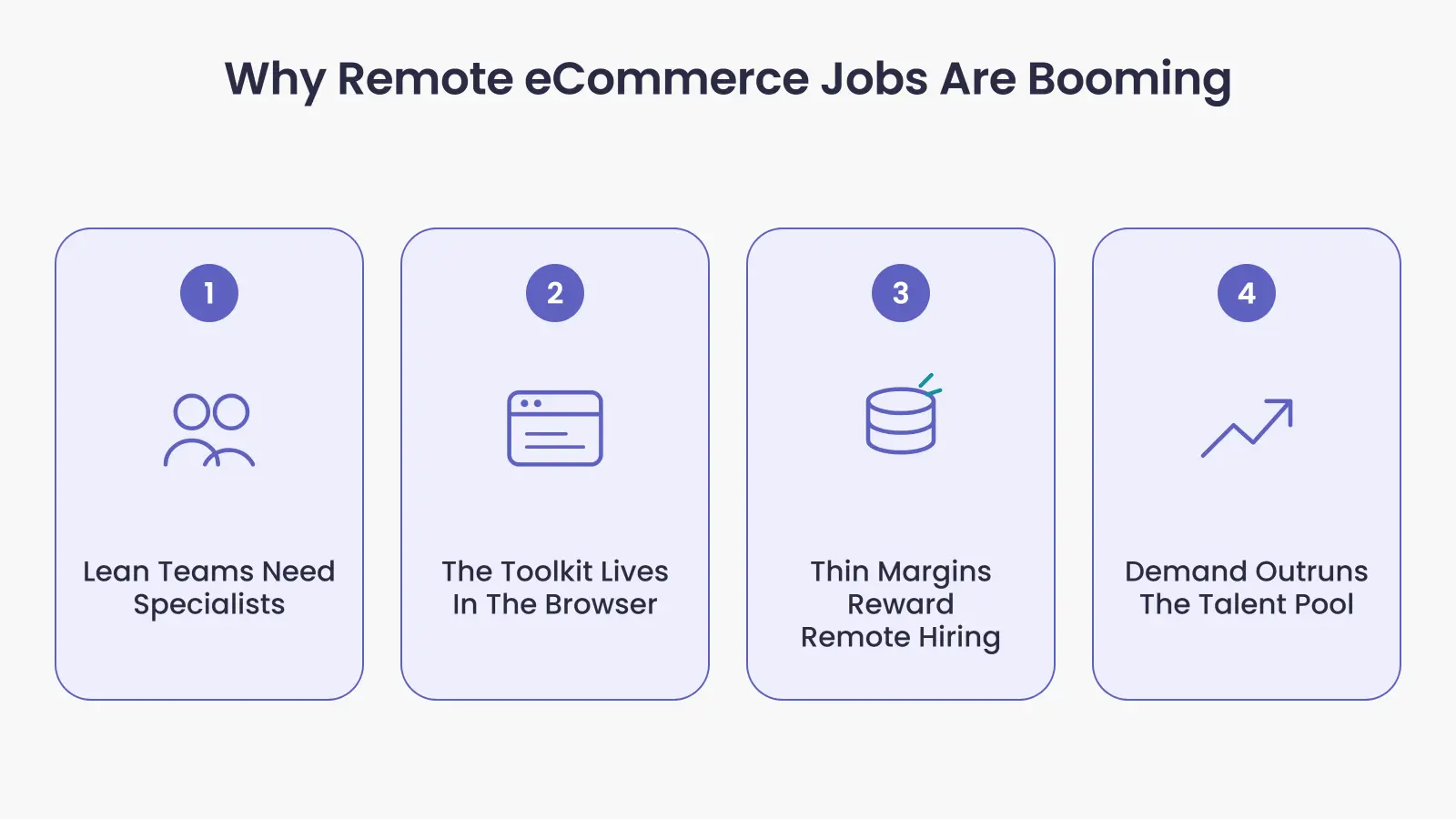
DTC brands were born online, so the whole "return to office" drama barely touches them. A few things turned remote hiring from a perk into the default, and they explain which jobs keep opening up.
1. Lean Teams Need eCommerce Specialists, Not Generalists
Picture a brand doing eight figures with fourteen people. There is no budget for a jack-of-all-trades who dabbles. They need one person who lives and breathes paid ads, and another who only thinks about email. Remote is how they find that freakishly good eCommerce specialist, even if they are three time zones or half a world away.
2. The Whole Toolkit Is Already In The Browser
The daft part about forcing an office for this work is that every tool opens in a browser tab. None of it is in a building, not the storefront and not the ad dashboards. There is no warehouse to pace around, no server closet to monitor. Force the job into one city, and all you have done is shrink who can apply.
3. Thin Margins Reward Hiring Across Borders
DTC margins are brutal once ads and shipping take their cut. Hiring remotely lets a founder in New York get genuinely great work from someone in Georgia, where a salary covers more. Faced with paying for output or paying for someone's parking spot, most founders pick output every single time.
4. Demand For These Skills Is Real And Measurable
New channels keep inventing new remote jobs and opportunities quicker than anyone can train. And the appetite is wild. In 2025, fully remote roles were about 8% of US postings but drew 35% of applications. Even the better-paid remote gigs, many with medical and dental, get mobbed, so proof beats polish.
9 Remote eCommerce Jobs DTC Brands Keep Hiring For
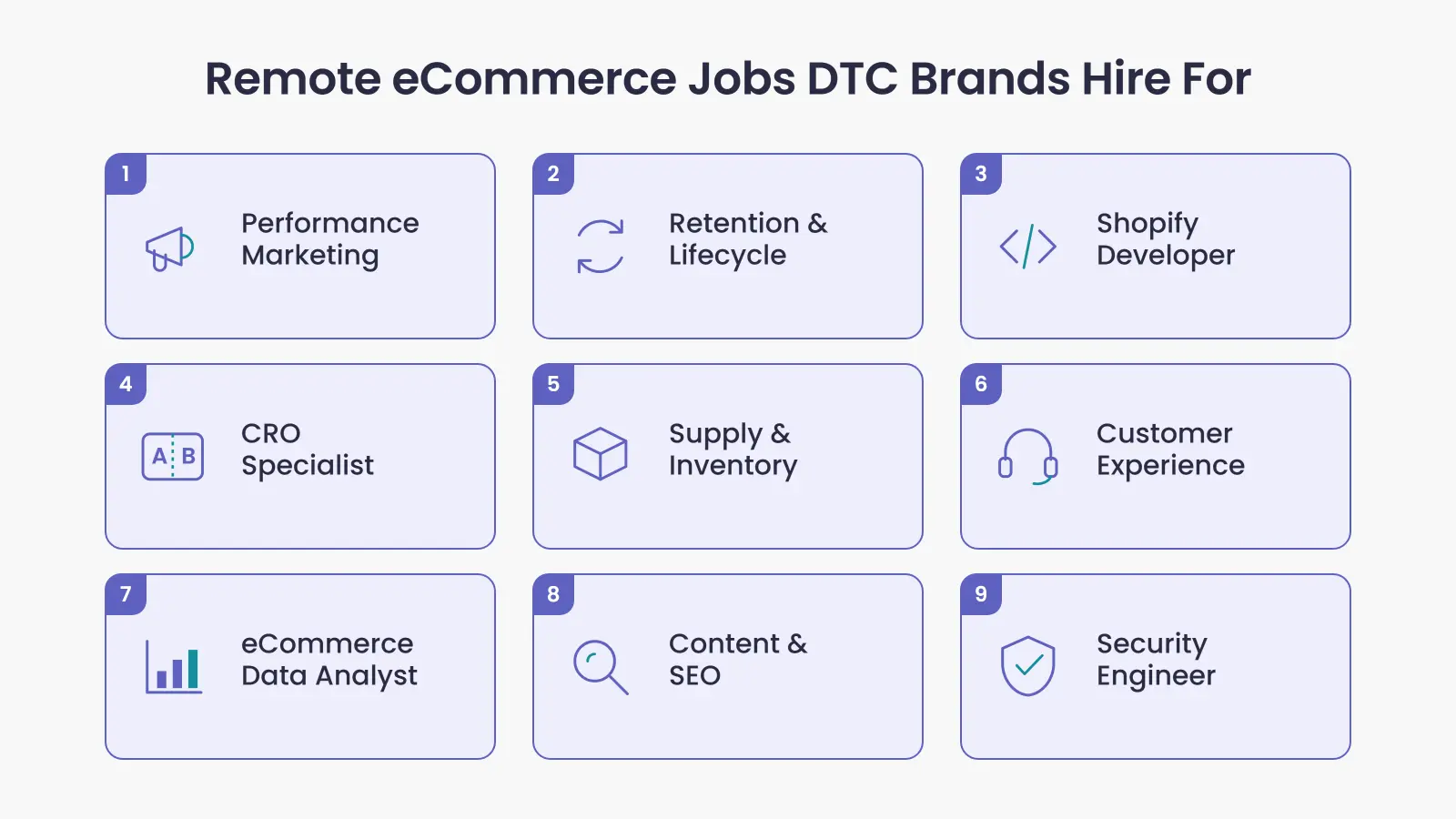
These nine come up over and over, and each owns a different corner of the business.
1. Performance Marketing Manager
This is the person feeding money into Meta and TikTok ads and watching every dollar that comes back. At most DTC brands, paid ads are the single biggest check they write, so a good buyer basically moves the whole business. The job keeps growing because ad costs crawl up every year, and cold traffic doesn't turn itself into sales.
How to Position For It:
Rebuild one brand's funnel in a deck and model the ROAS you would win
Learn Meta and Facebook Ads Manager plus a tracker
Publish a teardown of three real Amazon or Meta ad accounts with fixes
Quote blended ROAS and CAC in interviews, never reach or impressions
Salary: $75,000–$130,000
Tools to Know: Meta Ads Manager and Triple Whale
2. Retention And Lifecycle Marketing Manager
Everyone claps for the person bringing new buyers in. This role owns the email marketing and SMS program and the whole after-the-sale relationship. Brands noticed that selling to someone twice beats finding a stranger, so the seat became essential.
How to Position For It:
Build a win-back flow in Klaviyo and report the revenue it clawed back
Get fluent in dunning and card-updater tools, not just writing subject lines
Show a cohort chart where repeat-purchase rate climbed on your watch
Tie every campaign to lifetime value or retained revenue
Salary: $85,000–$145,000
Tools to Know: Klaviyo and Recharge
3. Shopify And Headless Developer
Every storefront bug and broken checkout ends up in this person's lap. DTC brands win or lose on a site that loads fast and a checkout that never chokes. So a developer who truly knows Shopify is worth serious money. Demand shot up once brands outgrew themes and started building custom, headless setups.
How to Position For It:
Ship one public Shopify app or theme and link the live repo
Learn Liquid and a headless framework before you apply
Take a slow store, fix its speed, and post the before-and-after
Keep a portfolio of live stores plus the documentation and engineering behind them
Salary: $75,000–$140,000
Tools to Know: Shopify Liquid and Hydrogen
4. Conversion Rate Optimization (CRO) Specialist
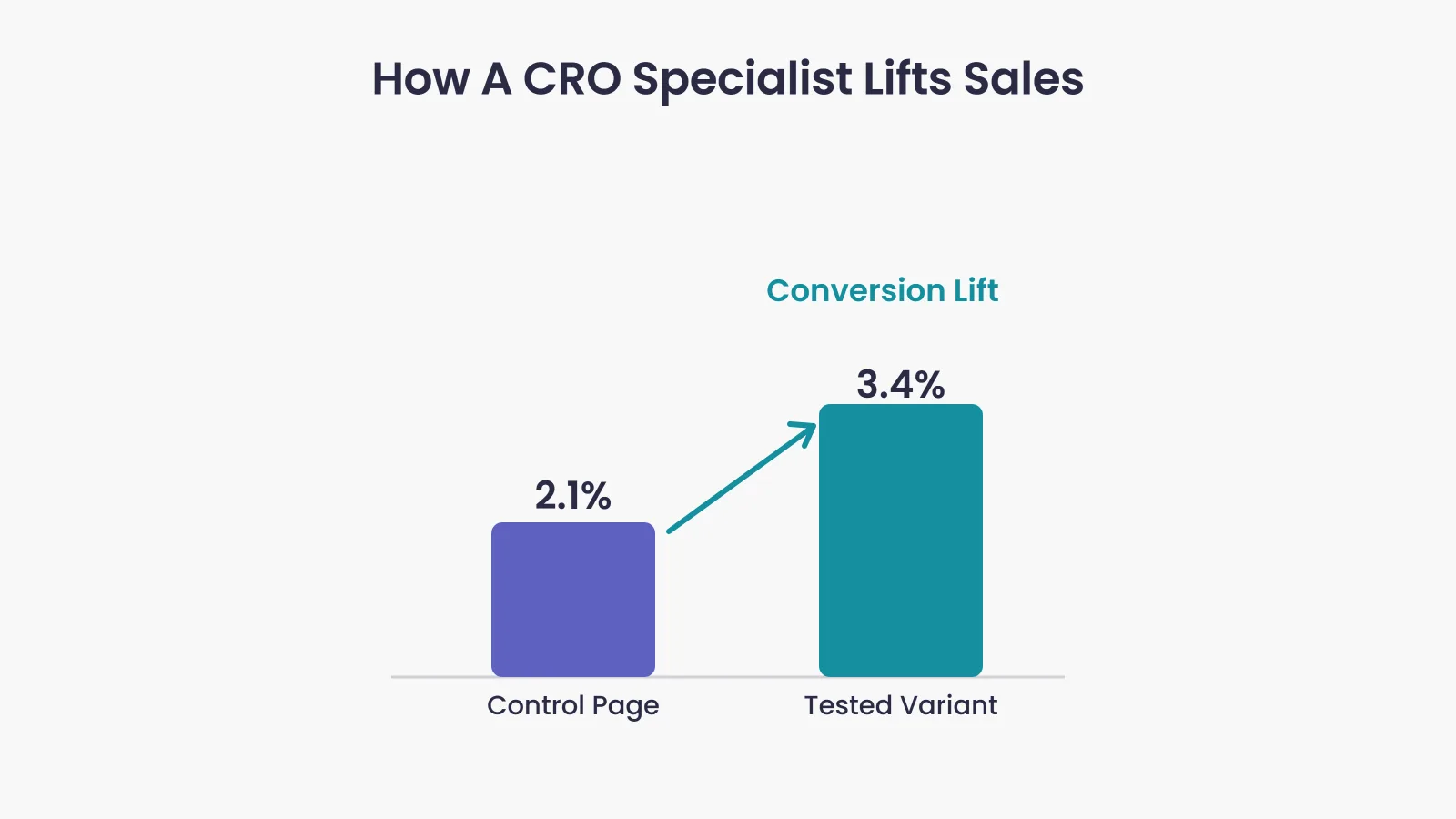
Squeezing more orders out of the visitors already on the site is basically free money. This person runs tests across product pages and checkout to lift conversion without touching the ad budget. The role blew up the moment founders realized a better-converting page beats a bigger spend, every time.
How to Position For It:
Run a real A/B test on any live site and write up the result
Learn a testing tool like VWO and a session recorder like Hotjar
Tear down a checkout flow in detail, with three sharp hypotheses to test
Report wins as conversion lift and confidence
Salary: $70,000–$130,000
Tools to Know: VWO and Hotjar
5. Supply Chain And Inventory Planner
A product can go viral and still make zero money if it is sold out for a month. This person calculates demand and keeps cash from getting stuck in stock, while pushing the 3PL and fulfillment so orders actually ship. The role got serious once eCommerce operations and supply chains turned unpredictable, and brands felt how much a stockout hurts.
How to Position For It:
Build demand forecasts and reporting that survive tight deadlines
Learn inventory management tools like Inventory Planner and reorder-point math
Show one time you avoided a stockout or cleared slow dead stock
Talk in weeks of cover and sell-through, not just units
Salary: $65,000–$110,000
Tools to Know: Inventory Planner and NetSuite
6. Customer Experience (CX) Lead
This person runs the help desk and the returns side, then feeds what they hear straight back to the people building the product. And that feedback cycle is only worth anything if the questions are sharp. "How did we do?" earns you a shrug, while a pointed set of post-purchase survey questions tells you exactly which size runs small or which page oversells.
How to Position For It:
Cut first-reply time on a real queue and show the before-and-after
Learn a helpdesk and macros that assist without sounding robotic
Turn 50 complicated tickets into a ranked list of product fixes
Track CSAT and repeat-purchase rate, not tickets closed per hour
Salary: $65,000–$115,000
Tools to Know: Gorgias and Zendesk
7. eCommerce Data Analyst
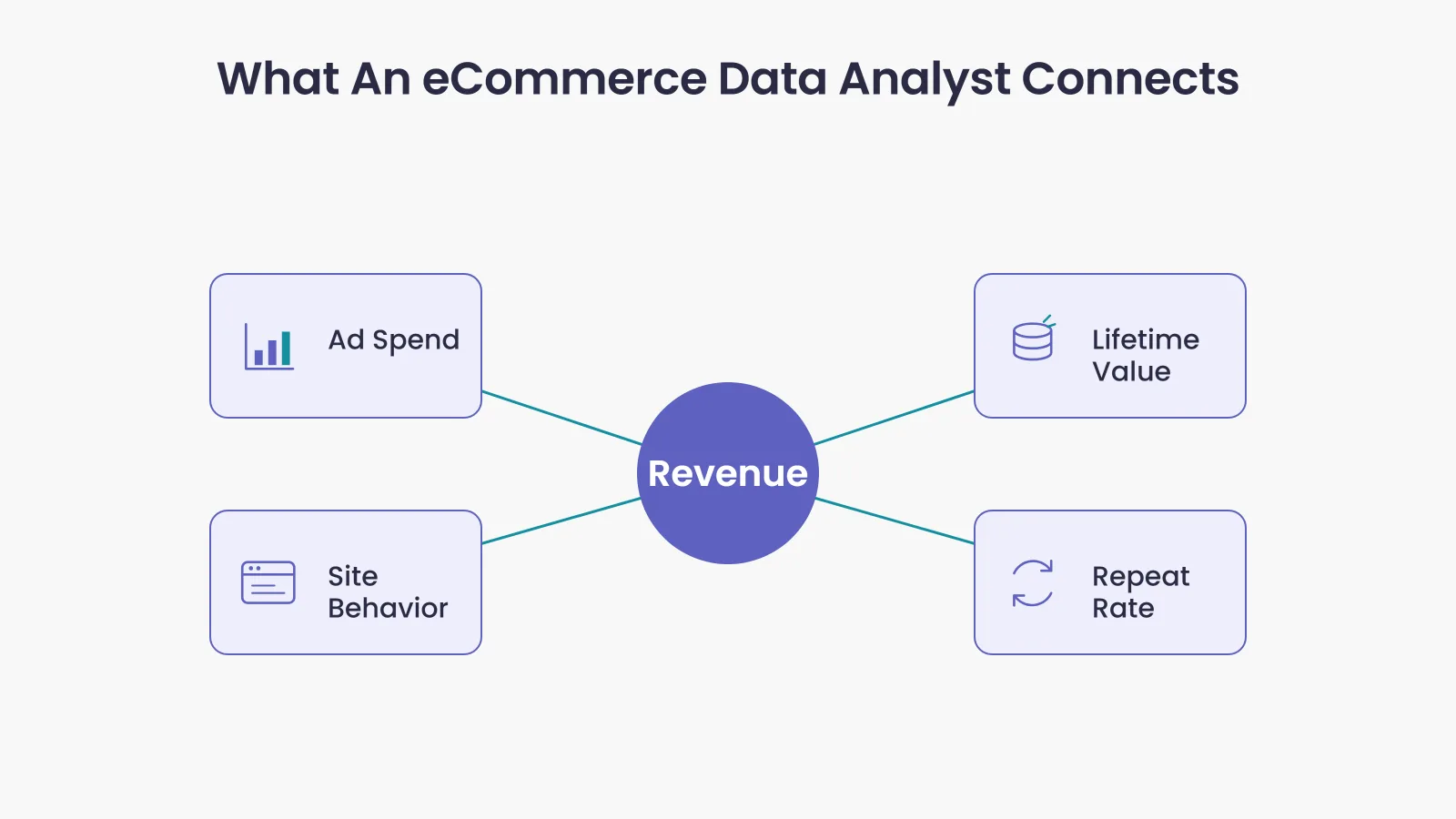
Somebody has to say what is genuinely working, and that is this role. They tie ad spend and on-site behavior to real revenue, so internal teams stop arguing over 10 dashboards and finally share one clear view. Demand jumped because the third-party cookies everyone leaned on stopped working.
The tricky part is that a lot of sales never make it back to the ad platform now. Someone taps an ad on their phone, buys two days later on a laptop, and the pixel loses the thread. So a winning ad looks dead. Rebuilding that trail with server-side tracking is where a sharp analyst proves their worth.
How to Position For It:
Build a dashboard tying ad spend to lifetime value
Learn GA4 and a BI tool like Looker Studio well enough to ship
Fix data quality in one broken attribution setup and show truer revenue
Answer real questions in plain words, not charts nobody asked for
Salary: $70,000–$120,000
Tools to Know: GA4 and Looker Studio
8. Content And SEO Manager
Paid traffic dies the second the card stops getting charged, so brands crave a channel that keeps giving. This person builds the content and search presence that pulls buyers in for free, month after month. It matters more now that AI answers are rewriting how people find products, and brands are desperate to show up inside them.
How to Position For It:
Grow one page's organic traffic and screenshot the growth in Search Console
Learn a tool like Ahrefs and how AI search picks its sources
Publish three pieces in the brand voice that rank for their keywords
Tie every piece to revenue or a loyal community, not pageviews
Salary: $70,000–$120,000
Tools to Know: Ahrefs and Surfer
9. Application Security Engineer
Every app and custom API a brand adds is one more unlocked door. This security engineering role guards the customer data and payment flow to ensure nothing gets past. It is one of the newest remote eCommerce jobs and the best paid, with competitive compensation to match, since one breach can destroy a brand overnight.
The job isn't buying one firewall and clocking off. It is that the number of things to watch keeps multiplying while the team stays small. Every integration adds endpoints, and bots hammer them all day and night. In 2025, a brutal 64% of bot attacks on retail went straight for API logic, not some login box.
One analyst can’t watch that volume of alerts by hand. So modern security teams lean on automation for the first pass. The emerging model is an agentic SOC, where AI agents handle the repetitive work of enriching alerts and summarizing cases, while human analysts keep authority over the risky calls.
The person in this role rarely builds that system from scratch. They do need to grasp how it works and where the agents stop and a human decides, so they can tune it until real threats surface and false alarms fade. Knowing how autonomous detection and human oversight fit together is becoming the line between a security hire who scales and one who gets lost.
How to Position For It:
Audit one store's integrations and name its three most exposed endpoints
Learn the OWASP API risks and a tool like Cloudflare by doing
Run a mock breach and write every step through to completion
Talk in blast radius and time-to-contain, not recycled security terms
Salary: $120,000–$190,000
Tools to Know: Cloudflare and Snyk
Not sure which one is yours? This quick reference matches a background you might already have to the fully remote role worth chasing and the one piece of proof that gets you a reply.
4 Mistakes To Avoid When Chasing Remote e-Commerce Jobs
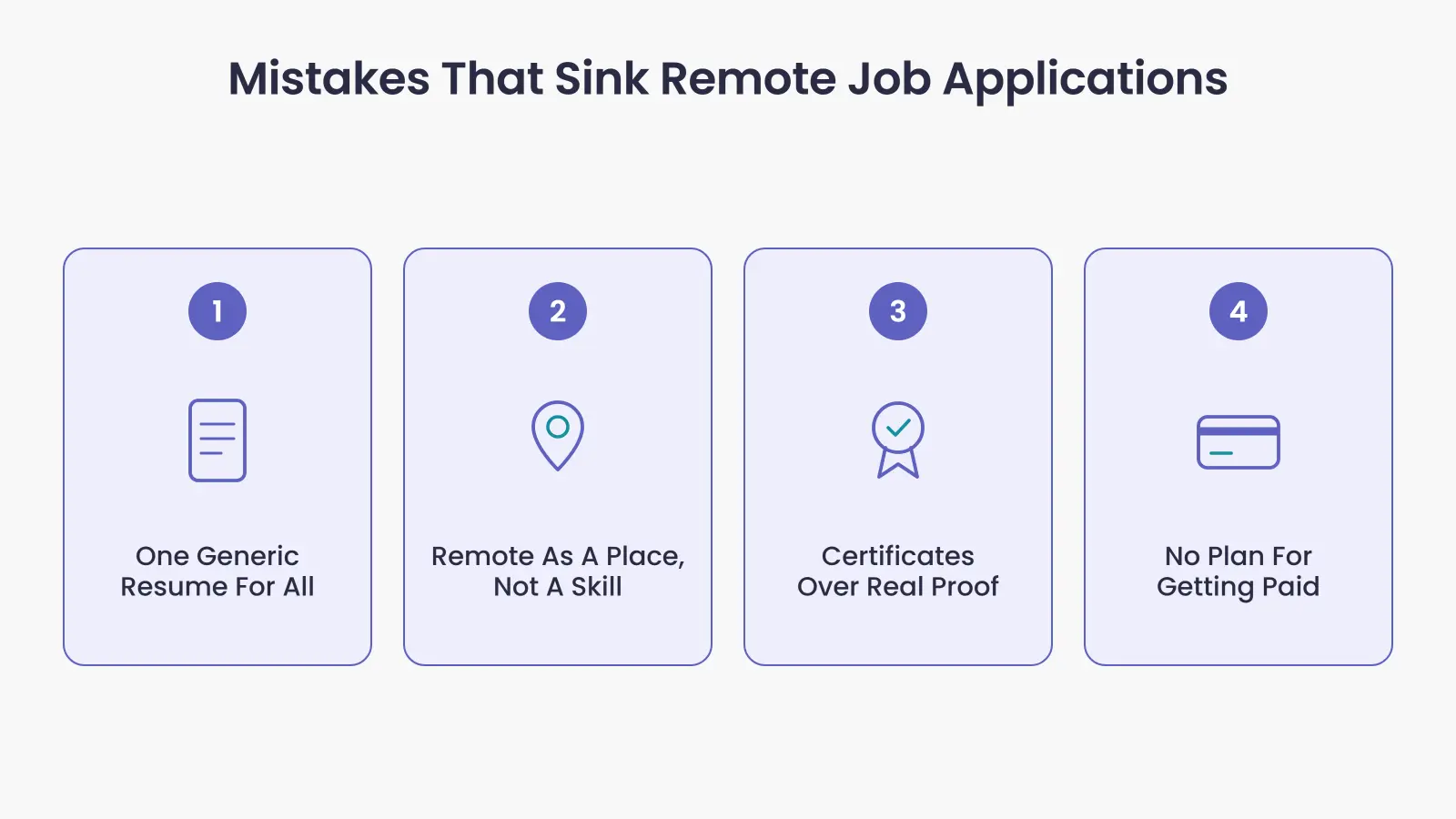
Getting one of these comes down to not sabotaging yourself as much as having the skills. These 4 knock out more solid applicants than any gap in an employment history.
1. Firing Off One Generic Resume Everywhere
The same resume sprayed at 9 different jobs comes across as 9 throwaway tries. A DTC hiring manager pays attention to the one number that role depends on. And when it is missing, you are gone before the second bullet. Worse, a generic resume shows that you couldn't be bothered to learn what the job needs.
How to Fix: Rewrite the top third for each role so the first number a manager sees is the one they care about. Echo the exact words a recruiter used in the posting, and use a resume built for remote roles that leads with results. Three sharp applications beat thirty lazy copies.
2. Treating Remote As A Place, Not A Skill
Many people think remote just means the same job in pajamas. Hiring managers take it completely differently. Companies hire remotely because diverse, globally distributed teams outperform homogeneous ones by 35%, but only when people can actually collaborate without hand-holding.
What keeps them up at night is a hire who can't navigate async work and needs chasing across time zones. Show none of that self-direction, and a sharper operator takes the seat.
How to Fix: Make the application itself the proof. Reply quickly, and write like someone who respects a reader's time. Point to one thing you pulled off with nobody watching, and get sharp on the habits remote teams expect.
3. Collecting Certificates Instead Of Proof
A rough market makes people keep buying courses and training. Another certificate seems like progress, but it answers a question no DTC brand is asking. These teams want to see that you moved a number once. And a shelf of badges with no result behind it looks like someone forever getting ready to begin.
How to Fix: Build one actual thing instead, a store you launched or a dashboard you connected. And put that remote work on a resume where a manager can click it. One shipped project outweighs 5 finished courses, easily.
4. Not Planning How The Money Reaches You
You chased a remote role precisely because the brand could be anywhere, and then payday turns into its own obstacle course. A company pays you from abroad, your bank holds it for days, takes a cut on the conversion, and sometimes freezes it for a "review" while rent is due.
How to Fix: Many international contractors dodge all that by getting paid in stablecoins. The old problem was spending them. That balance does nothing at the corner shop if you have to sell it and move it into a bank first. Now options like Oobit’s crypto payment card solve that problem.
It hangs off your own wallet, keeps the money in crypto until the second you tap, then converts at checkout across all places that take Visa. None of this is about chasing crypto for its own sake. It is about not losing a slice of every paycheck to fees and delays simply because your employer is on another continent. So work out how you will get paid before you accept.
Conclusion
Underneath it all, every one of these jobs wants the same thing. DTC brands don't care about your degree or whether your title said director. They care that you changed a number they lose sleep over. Pick the role that fits your head, build one piece of real proof, and you'll pass prettier resumes with nothing behind them.
That proof still has to clear a 30-second skim and a resume bot. That is what we do at My CV Creator. We build you a resume that gets past the ATS Resume Checker these brands hide behind, then point a cover letter at one exact role and tidy your LinkedIn. Whichever of these remote eCommerce jobs you are after, start at mycvcreator.com.