9 Best Team Assessment Tools for Teamwork Improvement and Team Performance Assessment
Every week, knowledge workers spend about one-fifth of their time searching for information—roughly a full day, McKinsey reports.
An even bigger drag on results is psychological safety: Google’s 180-team Project Aristotle study shows that a speak-up culture outweighs talent or tenure as the top driver of success.
We tested nine research-backed team assessment tools that surface these issues fast, giving you clear, actionable data this quarter.
Why team assessment tools beat gut instinct
Data, not intuition, predicts team performance.
Between 2012 and 2014, Google’s People Operations group studied 180 product and sales teams in an initiative called Project Aristotle and found that psychological safety explained more performance variance than talent or tenure (rework.withgoogle.com).
A 2018 Gallup meta-analysis of 49,495 business units showed that teams who discuss and apply their CliftonStrengths every day post 12.5 percent higher productivity and 8.9 percent higher profitability than peers who do not (Gallup).
Modern team assessment tools surface these predictors early. TeamDynamics reports that only about 34 percent of managers correctly identify their team's type and that 92 percent of people are in tension with at least one of their team's core behaviors, based on thousands of teams in its dataset. Those blind spots are easy to miss in one-on-ones but become obvious when you look at structured team-level results. A ten-minute pulse survey can reveal whether junior engineers feel safe questioning a design review or whether everyone is competing for the same “shaper” tasks while no one owns the details. Leaders can close these gaps quickly, before missed handoffs turn into missed deadlines.
When teams act on hard data, they make faster decisions, reduce rework, and build a culture people choose to stay in. Evidence-based teamwork consistently outperforms guesswork.
How we picked the nine team assessment tools
We scored every candidate against a four-point rubric:
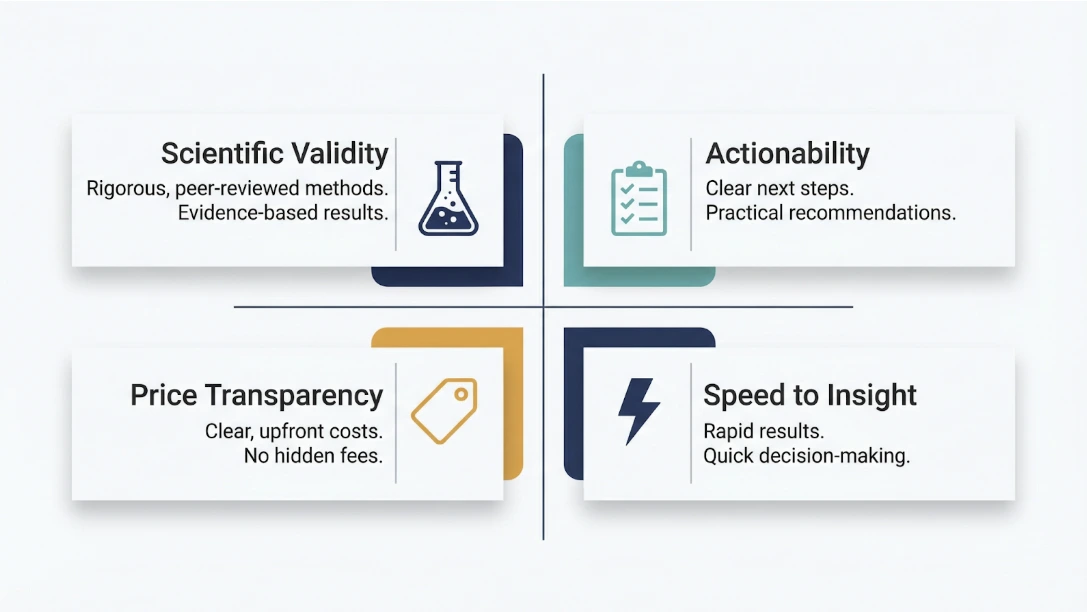
We scored every team assessment tool against a four-point rubric to build a research-backed short list
Scientific validity. Does the product cite peer-reviewed studies or publish its own validation research?
Actionability. Will a manager know exactly what to do with the report the same day it arrives?
Price transparency. Are fees published up front, or locked behind an “enterprise demo” form?
Speed to insight. Can the team get its first result in less than one hour, or one meeting for heavier platforms?
Only tools that met at least three of four points and scored a minimum 80 percent on our rubric made the final list. The rest stayed off the page.
Fast snapshot tools: build a common language in one meeting
When a 12-week rollout feels excessive, choose a team assessment tool that delivers answers in minutes. The four options below generate a shareable report in a single sitting, often in under 30 minutes, so sprint teams, new hires, or cross-functional task forces can speak the same collaboration language before the next stand-up.
TeamDynamics: the instant X-ray
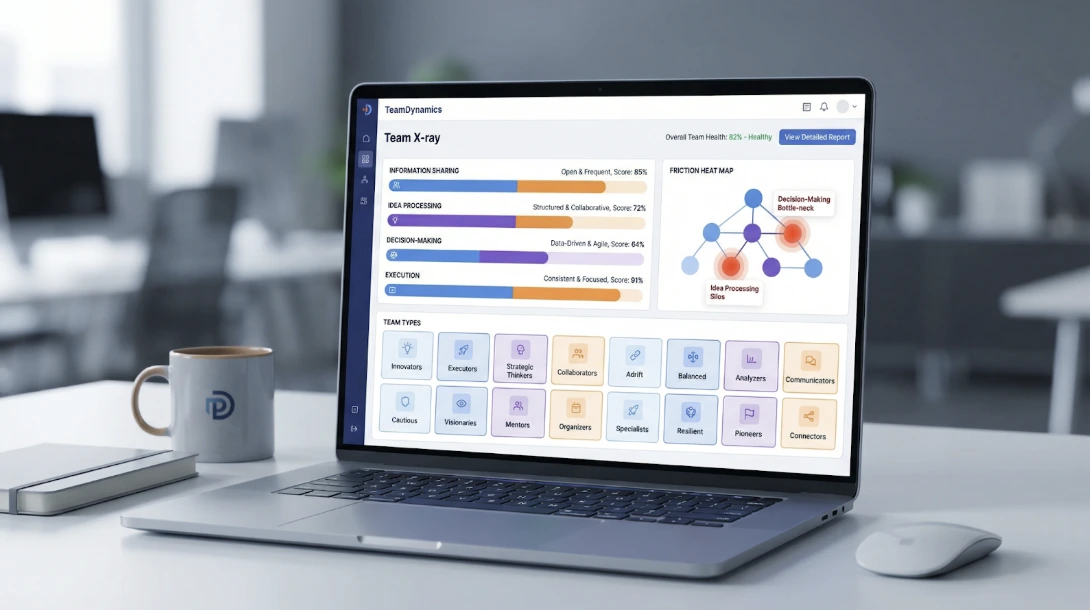
TeamDynamics analyzes how any group works across four core dimensions—how it shares information, processes ideas, makes decisions, and executes plans—then translates those patterns into one of 16 team types.
In 10–15 minutes each teammate completes a research-backed survey, and the platform emails a color-coded report in under five minutes via the TeamDynamics survey. No IT tickets, no integrations—just an inbox link everyone can open.
The report converts stats into plain-language coaching: meeting prompts, retro “plays,” and a heat map that highlights where preferences clash. Your team can test an idea at the very next stand-up instead of waiting for a consultant.
Pricing is transparent: $39 per person for teams of 2–20, with a free “Rapid Result” preview that arrives in two minutes. That one-time fee buys a common vocabulary and an actionable roadmap the same afternoon you hit “send.”
Choose TeamDynamics when speed and simplicity matter more than deep analytics. It will not replace a continuous engagement platform, but it will reveal style gaps and decision bottlenecks before they derail your next sprint.
CliftonStrengths: amplify what’s already working
Most team assessment tools search for gaps; CliftonStrengths highlights talent. In about 30 minutes, each teammate answers 177 quick-response items and receives a ranked profile of 34 strength themes.
Why it matters: a 2018 Gallup meta-analysis of 49,495 business units found that teams who apply their strengths daily enjoy 8.9 percent higher profitability and 12.5 percent higher productivity than those who do not (Gallup).
Getting started is simple: buy an access code, share the link, and debrief the results. The full CliftonStrengths 34 report costs $59.99 per person (store.gallup.com). Even cash-conscious startups can convert latent talent into daily momentum, with no restructuring required.
Everything DiSC: four letters that defuse friction
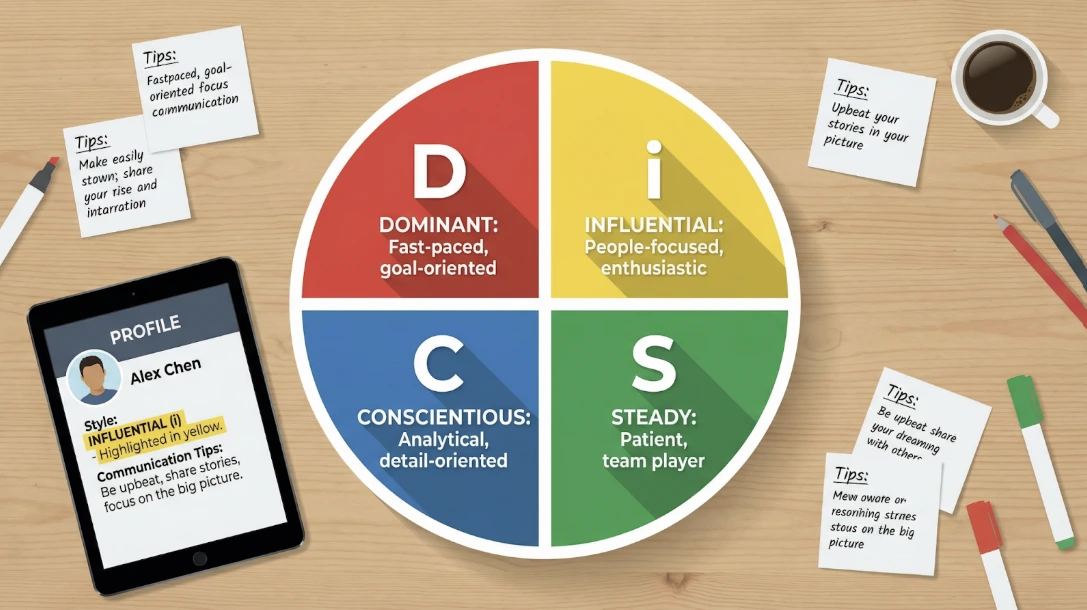
When communication stalls, a team assessment tool can translate styles quickly. Everything DiSC sorts people into four instinctive approaches—Dominance, Influence, Steadiness, Conscientiousness—using an online survey that takes 15–20 minutes (discprofile.com).
The personalized report offers concrete do’s and don’ts for working with each colleague. Maybe Sofia’s high-D energy craves quick decisions, while Marcus’s high-C brain needs the numbers first. What once felt like conflict becomes a simple tweak in meeting order or data prep.
Getting started is easy: purchase an access code starting at $90 per profile, with volume discounts (discprofile.com). A free Catalyst app lets you pull up side-by-side comparisons before a client call.
Wiley reports more than 10 million learners across 150,000 organizations in 70 countries, with 97 percent global satisfaction (everythingdisc.com). That social proof reassures even the biggest skeptic.
Choose Everything DiSC when meetings feel tense or feedback lands flat. It gives your team a shared playbook for tone, pace, and detail, turning friction into flow before the next sprint review.
MBTI: familiar shorthand for instant empathy
Because many people already know (or can guess) their four-letter type, the Myers-Briggs Type Indicator feels less like a team assessment tool and more like a shared language. MBTIonline Teams lets 3–30 colleagues retake the official assessment in about 20 minutes and plots everyone on a 16-type grid; you might spot, for example, an ENTP cluster with a lone ISFJ who keeps the details grounded.
The payoff is dialogue, not prescription. If Thinkers outnumber Feelers, add a teammate who champions people impact to the next roadmap review. MBTI’s approachable vocabulary turns abstract “diversity of thought” into concrete meeting tweaks.
Pricing is transparent: $99.95 per participant for the self-guided team package (mbtionline.com). The debrief fits into a single lunch-and-learn, making it an easy way to spark psychological safety when trust is low but curiosity is high.
Role-and-workflow alignment tools: plug every gap before it slows delivery
Even friendly teams stall when everyone tackles the same task, or when a critical step lacks an owner. The two team assessment tools below reveal those blind spots in under 15 minutes. Each maps your teammates’ preferred stage of work, so projects move smoothly from concept to launch.
Belbin team roles: balance the cast, sharpen delivery
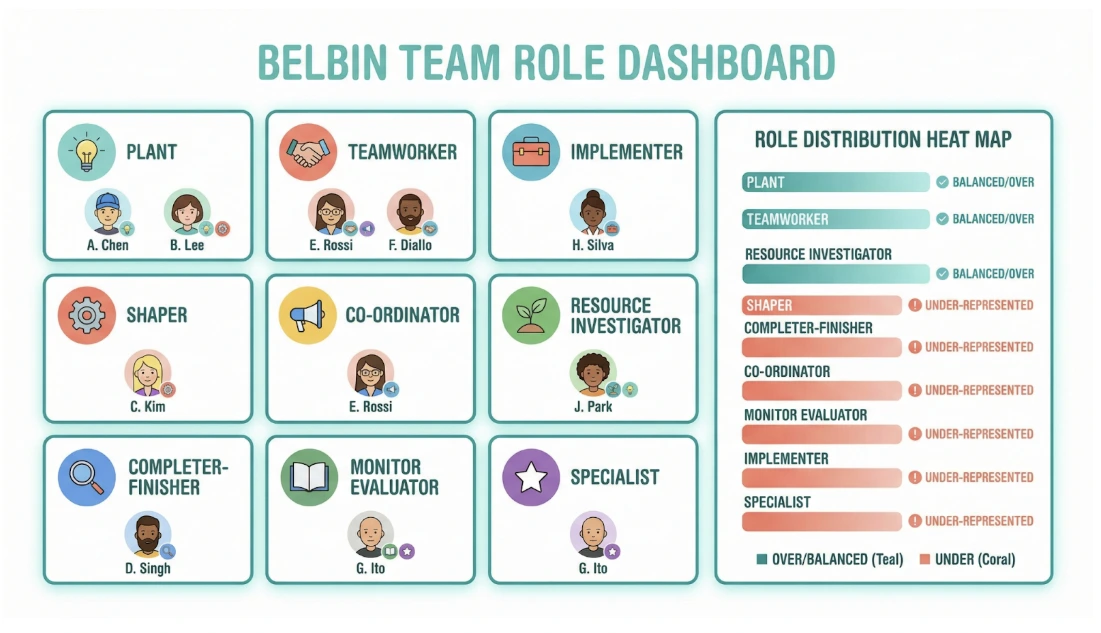
Belbin is a team assessment tool that maps each teammate to one, or a blend, of nine classic roles: creative Plant, deadline-driven Shaper, detail-oriented Completer-Finisher, and more. A 20-minute Self-Perception Inventory delivers a report within minutes; your team heat map could reveal “Four Shapers, zero Teamworkers,” explaining missed handoffs better than a month of retros.
Because the language is plain—roles, not psychology jargon—your team can act fast. Reassign tasks before lunch, pair a lone Monitor-Evaluator with a big-picture Plant, or plan your next hire around a people-focused Teamworker.
Pricing is transparent: £39 plus VAT (about $49) per individual report, with free observer feedback and no subscription fees (belbin.com). Print the PDF, walk into the planning session, and leave with a sharper staffing plan in one meeting.
Working Genius: keep projects in their sweet-spot energy

Patrick Lencioni’s Six Types of Working Genius model tracks a project’s natural rhythm: Wonder, Invention, Discernment, Galvanizing, Enablement, Tenacity. In a 10-minute survey each teammate discovers two “Genius” zones they love and two “Frustration” zones they prefer to skip (tablegroup.com). Use this team assessment tool when burnout appears or handoffs keep stalling; matching momentum to the right hands beats any project-management hack. For distributed squads, this team dynamics assessment tools for remote teams guide explains how to adapt the rollout for async workflows and multiple time-zones.
A team heat map makes blockers obvious. Too much Invention but not enough Tenacity? Expect brilliant kickoffs that sputter at the finish. Spot that gap early, then add a finisher or break the work into milestones that match your crew’s energy.
The assessment costs $25 per person, with volume discounts starting at 100 licenses (tablegroup.com). Because the language is intuitive, your team can swap tasks the same day. Use this team assessment tool when burnout appears or handoffs keep stalling; matching momentum to the right hands beats any project management hack.
The Predictive Index: design teams with hiring and execution on one graph

PI’s Behavioral Assessment takes only six minutes and scores each teammate on four drives: Dominance, Extraversion, Patience, and Formality (docs.predictiveindex.com). Because the same instrument powers PI Hire, every new recruit lands on the same map your current team uses.
Team Discovery overlays business goals such as innovate, optimize, or scale, then flags gaps or overloads in real time. Launching a disruptive product but short on high-Dominance “Captains”? The dashboard alerts you before the roadmap slips.
Annual plans start at $7,550 for Validated Hiring and $9,950 for the Talent Optimization Essentials bundle (predictiveindex.com). More than 10,000 companies rely on PI worldwide, and most managers complete a half-day certification to read the charts confidently.
Choose this team assessment tool when growth or regulation leaves no room for hiring errors. It ties talent architecture to business strategy so tightly that your workforce plan reads like an engineering spec: clear, testable, and ready to scale.
Hogan team report: expose derailers before they detonate
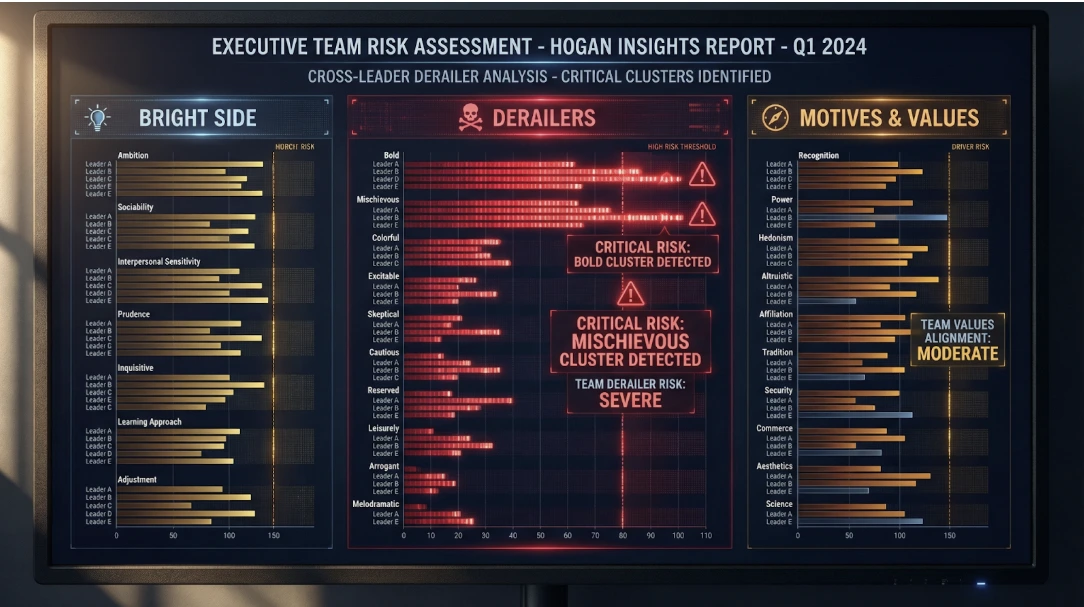
Most team assessment tools highlight strengths; Hogan also reveals stress cracks. The platform blends three inventories—the Hogan Personality Inventory (bright side), Hogan Development Survey (11 derailers), and Motives, Values, Preferences Inventory—into one Team Report.
These “derailer” clusters act as an early warning system. If three leaders score high on Bold and Mischievous, expect overconfidence and rule bending when deadlines tighten. Spot that pattern now and you can rotate devil’s-advocate duties, add red-team reviews, or pair a data-driven Skeptic with the visionaries.
The Team Report costs about $200 per participant and requires a Hogan-certified facilitator for a 2-hour debrief (hoganassessments.com). Regulated industries, M&A taskforces, and zero-margin product launches trust Hogan because one blind spot can cost millions.
Choose Hogan when failure is not an option and human risk needs the same rigor as technical QA. It surfaces landmines early, while the stakes are still on paper.
Culture Amp: pulse what matters, prove it in the numbers

Most engagement surveys sit in dashboards no one opens. Culture Amp fixes that by linking every pulse question to benchmarks from more than 6,500 companies across 190 countries (cultureamp.com) and weaving insights directly into performance reviews, goal tracking, and actions.
Open your dashboard and you won’t just learn that psychological safety dropped four points this quarter; you’ll see how that score ranks against peers, which manager owns the lagging driver, and which playbook action lifted similar teams last year. The platform even prompts you to assign an owner and a deadline so feedback loops finally close.
Pricing starts at $9 to $14 per user per month on annual Engage plans, with custom quotes for the full suite (cultureamp.com). That subscription buys continuous listening, DEI analytics, and SOC-2 compliance. Customers like H&H Group achieved 85 percent performance-cycle completion within six months of rollout (cultureamp.com).
Choose this team assessment tool when you need real-time culture telemetry the board can trust. It surfaces morale risks as quickly as Salesforce flags pipeline slips, giving leaders the same data discipline for people that they already apply to revenue.
Enterprise-grade team assessment tools: data the board can sign off on
A missed decision can cost your company millions. Gartner estimates that a five-billion-dollar firm loses $99 million each year when unseen risks delay a product launch (Gartner). The three enterprise team assessment tools below surface those risks early, pair snapshot and trend analytics, and connect team dynamics to revenue, retention, and compliance metrics your board cares about.
Conclusion
Even the smartest teams run into friction that doesn’t show up on a project plan. People interpret priorities differently, hesitate to challenge ideas, or unknowingly compete for the same type of work while other responsibilities go uncovered. That’s why team assessment tools consistently outperform gut instinct—they make hidden teamwork patterns visible, measurable, and fixable.
The real value isn’t the report itself. It’s what happens next. When teams use an assessment to build a shared language, agree on one or two behavior changes, and then check progress in 30 to 60 days, the impact is fast and tangible. Decision-making speeds up, communication becomes clearer, rework drops, and psychological safety improves because people know the team is actively working on how it collaborates—not just what it produces. In short, assessments transform teamwork from an abstract “culture goal” into a practical performance system you can strengthen this quarter and refine all year.
If you want the biggest payoff, start with a fast snapshot tool to get alignment immediately, then layer in a pulse survey platform if you need ongoing signals over time. Whether you’re leading a small sprint team or managing a growing department, evidence-based teamwork beats guesswork—and the best teams treat collaboration like a skill they can measure and improve.
FAQ
1) What is a team assessment tool?
A team assessment tool is a structured way to measure how a team functions—communication, decision-making, trust, role clarity, strengths, conflict patterns, and performance blockers. Instead of relying on gut feel, it turns teamwork into measurable signals you can act on.
2) What’s the difference between team assessment tools and employee engagement tools?
Team assessment tools are usually designed to reveal how people work together (styles, roles, friction points). They’re often used for team alignment or reset moments.
Engagement tools measure how people feel over time (psychological safety, burnout, belonging, confidence in leadership). They’re typically continuous.
Most teams get the best results by using one of each: a snapshot tool for clarity + a pulse tool for ongoing monitoring.
3) Which tool is best for improving teamwork fast?
If you want improvement this quarter, prioritize tools with:
fast completion time,
clear team-level insights,
and “what to do next” recommendations.
ADVERTISEMENT
That’s why quick snapshot tools like TeamDynamics, DiSC, Belbin, or Working Genius often produce the fastest wins—especially if your team needs a shared language right away.
4) Which tool is best for psychological safety?
If psychological safety is the priority, choose a tool that:
measures speak-up culture explicitly.
supports anonymous feedback.
and provides follow-up action plans.
Continuous engagement platforms (like Culture Amp) tend to be strongest here because psychological safety shifts over time and needs consistent measurement.
5) Are personality tests actually useful for team performance?
They can be—when used correctly.
Personality and style assessments improve teamwork by:
reducing misunderstandings (“they’re not difficult, they’re wired differently”),
clarifying communication preferences.
and improving empathy.
But they should not be used as hiring filters or as “labels.” They’re best as a team conversation tool, not a judgment tool.
6) How often should teams run assessments?
A good rule of thumb:
Snapshot tools (TeamDynamics, DiSC, MBTI, Belbin, Working Genius):
Run during team formation, after restructuring, or before big projects. Revisit every 6–12 months.Pulse tools (Culture Amp):
Run monthly or quarterly depending on team size and change level.
If your org is going through rapid growth, leadership changes, or burnout risk, run them more frequently.