
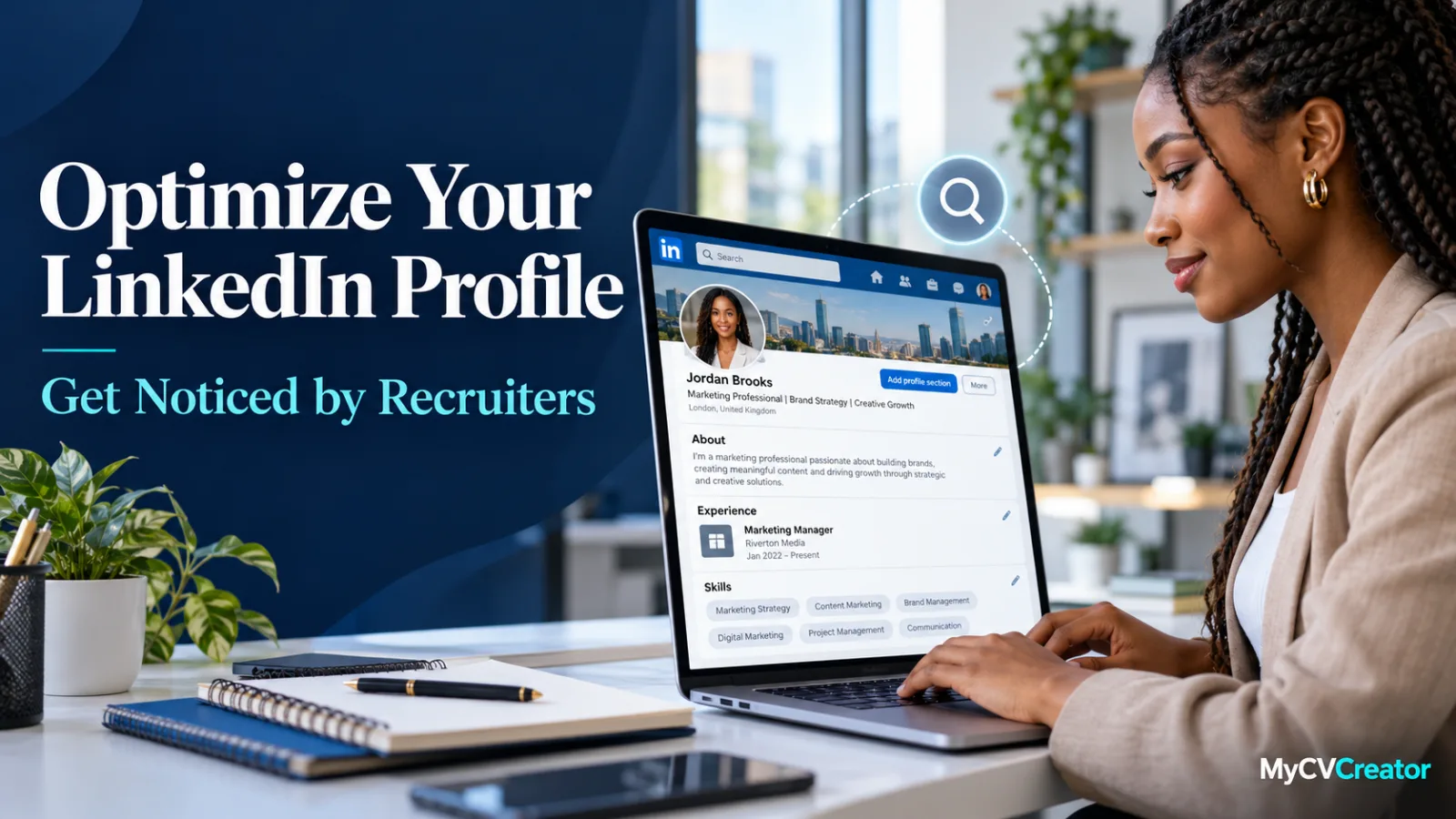
How to Optimize Your LinkedIn Profile for Better Recruiter Visibility
Your LinkedIn profile is more than an online resume. It is often the first place recruiters look when they want to learn about your experience, skills, and career goals. A well-maintained profile can help you appear in relevant searches, communicate your strengths, and create better job opportunities.
However, simply adding your job title and uploading your resume is not enough. You need to present your experience in a way that helps recruiters quickly understand what you do and what you can offer.
The good news is that you do not need to make major changes to improve your profile. A few focused updates can make it clearer, more professional, and easier to discover.
1. Write a Clear and Relevant LinkedIn Headline
Your headline is one of the first things recruiters notice. LinkedIn often displays it alongside your name in search results, connection requests, and comments.
Instead of using only your current job title, explain your area of expertise and the value you bring.
For example, instead of writing “Marketing Executive,” you could use:
Digital Marketing Executive | SEO | Content Strategy | Organic Growth
This gives recruiters a better idea of your skills and professional focus.
Try to include relevant terms that recruiters might use when searching for candidates in your field. Keep the headline natural and avoid adding too many unrelated keywords. Your goal is to make your expertise clear, not to fill every available space.
2. Choose a Professional Profile Photo and Background Banner
Your profile photo helps create a first impression. You do not need a professional studio photo, but you should choose a clear, recent image with good lighting and a simple background.
Wear something appropriate for your industry and make sure your face is easy to see.
The background banner is another opportunity to communicate your professional identity. You can use it to highlight your area of expertise, industry, or a short professional message.
For example, a software developer could use a banner related to technology, while a marketing professional might highlight SEO, content strategy, or digital growth.
Keep both elements simple and professional. They should support your profile rather than distract from your experience.
3. Create an About Section That Tells Your Story
The About section gives you space to explain your background, strengths, and career interests in your own words.
Avoid copying your resume summary without making any changes. Instead, write a short introduction that answers three questions:
What do you do?
What skills or experience do you bring?
What kind of work or opportunities interest you?
For example:
“I am a digital marketing professional with experience in SEO, content optimization, and organic growth. I enjoy helping businesses improve their online visibility through practical, data-driven strategies. My work focuses on understanding user intent, improving website performance, and creating content that supports business goals.”
You can also mention important achievements, industries you have worked in, or tools you use regularly.
Use a natural tone and keep the information relevant to your target roles. Recruiters should be able to understand your professional background without reading a long list of buzzwords.
4. Add Relevant Skills to Improve Discoverability
Skills help recruiters understand your capabilities and can support your visibility in LinkedIn searches.
Review job descriptions for the roles you want and identify the skills that appear regularly. Add the ones that genuinely match your experience.
For example, an SEO professional might include keyword research, technical SEO, content optimization, link building, Google Analytics, and Google Search Console.
A project manager might highlight project planning, stakeholder management, risk assessment, and Agile methodologies.
Do not add skills simply because they are popular. Your profile should reflect what you can actually do. You can also ask colleagues or managers who know your work well to endorse relevant skills.
5. Highlight Achievements in Your Experience Section
Your experience section should explain more than your daily responsibilities. Recruiters want to understand the results of your work and the value you brought to previous roles.
Instead of writing:
Responsible for website SEO and content optimization.
Try something more specific:
“Improved organic search performance by optimizing website content, strengthening internal links, and addressing on-page SEO issues.”
If you have reliable figures, include them. You might mention an increase in organic traffic, the number of projects managed, leads generated, or improvements in campaign performance.
Always use accurate numbers and explain your contribution clearly. If you cannot share exact figures, describe the scope of your work and the outcomes you helped achieve.
6. Keep Your Resume and LinkedIn Profile Consistent
Recruiters may compare your LinkedIn profile with your resume during the hiring process. Differences in job titles, employment dates, skills, or achievements can create unnecessary confusion.
This is where linkedin profile optimization becomes an ongoing process rather than a one-time task. Whenever you change jobs, gain a new certification, or complete a significant project, review both your resume and LinkedIn profile.
If you are unsure how to update resume on linkedin, start by opening your profile and reviewing the Experience, Education, Skills, and Certifications sections. Update the relevant details and check that they match your current resume.
You can also upload a resume through LinkedIn's job application features when applying for roles. Remember that uploading a resume for applications is different from updating the information displayed on your public profile.
7. Add Projects, Certifications, and Featured Content
Your profile becomes more convincing when it includes examples of your work.
Use the Featured section to showcase relevant projects, presentations, articles, portfolio links, or case studies. If you have completed an industry-recognized course, add the certification details to your profile.
For creative professionals, this could include design samples or writing portfolios. For marketers, it might include campaign results, published articles, or SEO case studies. Developers can highlight projects, GitHub repositories, or technical demonstrations.
Choose examples that support the roles you want. A few strong, relevant examples are more useful than a large collection of unrelated links.
8. Stay Active and Build Relevant Connections
Profile updates are important, but your professional activity also helps people learn more about you.
Follow companies in your industry, connect with relevant professionals, and engage thoughtfully with posts related to your field. You can share useful lessons from your work, comment on industry discussions, or publish insights about projects you have completed.
You do not need to post every day. Focus on being helpful and genuine rather than trying to stay visible at all costs.
When sending connection requests, personalize your message if possible. A short note explaining your shared industry or professional interest can make the interaction more meaningful.
9. Review Your Profile Regularly
Your career goals and experience change over time, so your LinkedIn profile should change with them.
Set aside time every month or quarter to review your headline, About section, skills, experience, and featured content. Remove outdated information and add new achievements where appropriate.
As part of your linkedin profile optimization routine, check whether your profile clearly reflects the roles you want next. If you are targeting a new industry or moving into a different position, adjust your wording to highlight the most relevant transferable skills.
You can also revisit how to update resume on linkedin whenever you complete a major project, earn a certification, or change responsibilities. Keeping your information current makes it easier for recruiters to assess your fit.
Final Thoughts
Improving recruiter visibility on LinkedIn does not require complicated strategies. It starts with a clear headline, a useful About section, relevant skills, measurable achievements, and consistent information across your professional documents.
Make your profile easy to understand and show evidence of what you can do. Stay active in your industry, showcase your strongest work, and update your details as your career develops.
Most importantly, write for the people you want to reach. When recruiters can quickly understand your experience, strengths, and professional goals, they have a clearer reason to consider you for the right opportunities.