
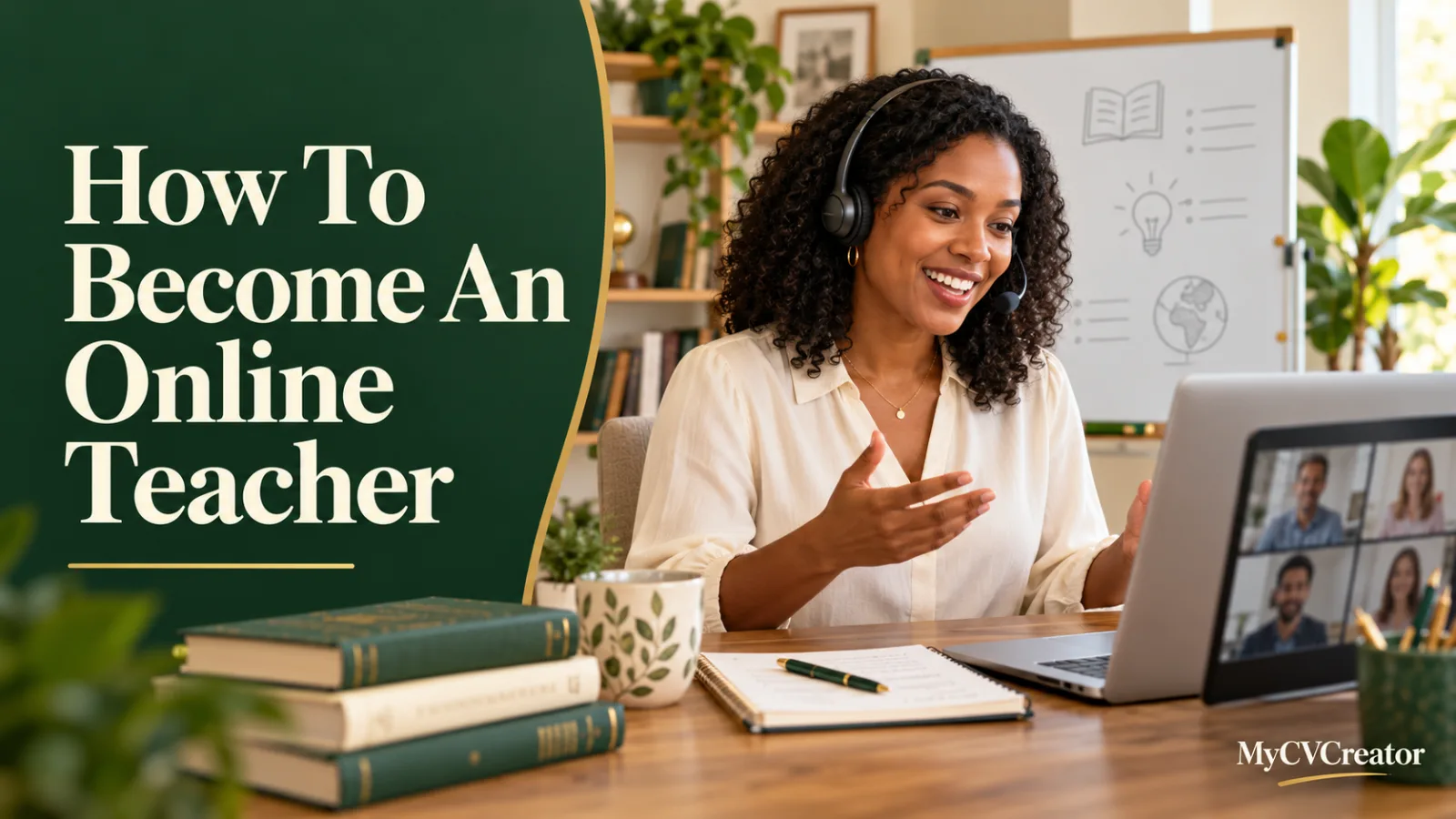
How To Become An Online Teacher
Online tutoring is teaching students remotely using the internet. You can be an academic tutor, language tutor, examination preparation tutor, or practical skills tutor without using a traditional classroom. Even though teaching qualifications are useful, you don’t always need them. What is very important is knowledge, communication skills, patience and ability to explain things very well.
1. Choose a subject or skill to teach: You can start by finding out what you have enough knowledge on to teach. It could be a school subject like physics, mathematics and biology or a skill like coding, music and graphic design. It is better to start with an area that you know well than to start to teach to many subjects. You can also pick a specialty according to the level of the student like primary school, secondary school, university or beginner level. A specific focus helps make it easier for potential students to understand what you are offering.
2. Identify your target students: decide on the type of people you want to teach before looking for students. Your targeted students can be children, university students, secondary school students, examination candidates or beginners trying to learn a new skills. Knowing the audience you want helps you to adjust your method of teaching. Younger students may need simpler and visual explanations while the older ones may prefer practical lessons. You also need to decide if you want to give one on one lessons or small groups.
3. Develop your teaching skills: knowing alot about a subject doesn’t make you a good teacher. You need to be able to explain things in a way that other people can understand. You can practice explaining difficult topics into smaller sections and explaining them in a simple language. You also need to learn how to ask question that let you know if the child is actually understanding or memorizing a note. You should also learn how to be a good listener, give constructive feed back and learn how to explain better when your previous approach did not work.
4. Choose how you will find students: you can find students using online tutoring platforms or independently. Tutoring platforms can link you with students that are already looking for lessons even though each platform may have different rules and requirements. You can also find independent students through personal referrals, social media, school communities, parent networks or your own personal website. This will give you controll over your services and pricing but you will be in charge of marketing yourself and managing students. Make research on this carefully before choosing the option you want.
5. Create a Professional tutor platform: your tutoring platforms is one of the best things your potential student or parent would see. It should explain what you teach, who you teach, your qualification, experience and what students should expect from the lessons you teach. Even if you have never worked as a tutor you don’t need to claim experience, you just need to highlight your academic achievements, knowledge, communication skills and experience helping someone understand a subject. Your profile should explain why your teaching would be useful and why students can understand your lessons.
6. Setup your online classroom: you need to have right equipment to conduct a lesson properly. Just for a start you could get a smartphone, tablet or computer. Getting a good microphone set can help make communication clear, while good lighting can make your lessons look more professional. You also need to become very comfortable with video conferencing, screen sharing, digital whiteboards, presentation, online documents and other tools for learning needed for the subject. Technology is supposed to make learning easier and not distracting.
7. Plan and deliver effective lessons: every lesson should have a clear plan. Before you start a lesson you should decide what you want your students to accomplish before the end of the class. You can start the lesson with a short review,followed by a short explanation of the new topic, a guided practice, an independent exercise and the final review. You should avoid doing all the talking, you can ask questions, give them problems to solve and explain things in a way that they understand. Interactive lessons make it easier to learn, identity misunderstanding and keep students involved.
8. Track students progress: a good tutor should be able to know whether their students are learning or not. You can use exercises, quizzes, assignments and other assessments to see if they understand or not. Pay attention to areas with persistent mistakes and areas where the student keeps on struggling. If a student doesn’t understand something you can try explaining it in a different way instead of repeating the same explanation. Tracking their progress can help you to give them useful feedback. Demonstrating their progress can help students put more fate on you and give you more value.
9. Set your rates and establish professional policies: decide what you want to charge based on your experience, subject, student level, lesson length and and what others providing similar services charge. As a beginner you can decide to choose a reasonable introductory rate while building experience and collecting reviews. As you gain more skills and experience you can adjust your pricing. You can also make policy for payment, cancelations, missed lessons, rescheduling and refunds. Setting up these policies help avoid misunderstandings and make your work look more professional.
10. Build your reputation and grow: your first student is very important on the road to establishing your reputation. You need to be reliable, arrive on time, prepare properly, communicate professionally and focus on helping students progress. You can ask students or parents that are satisfied to give their honest review. Recommendations can help you find more student without relying solely on advertisements. As you gain more experience you can try specialising in a particular area. You should continue trying to improve your subject knowledge, teaching techniques and use of educational technology.
Conclusion
Becoming an online tutor doesn’t mean you have to have a complicated setup or years of professional teaching experience. What is important is having enough knowledge, on the subject and being able to explain it properly, understanding your students needs and providong useful lessons. Start with a subject that you can teach properly, choose a student you can teach, create a professional tutoring setup and build a good reputation through good and reliable services. With consistency and continued improvement, your online tutoring can develop from a way of sharing knowledge to a strong career.