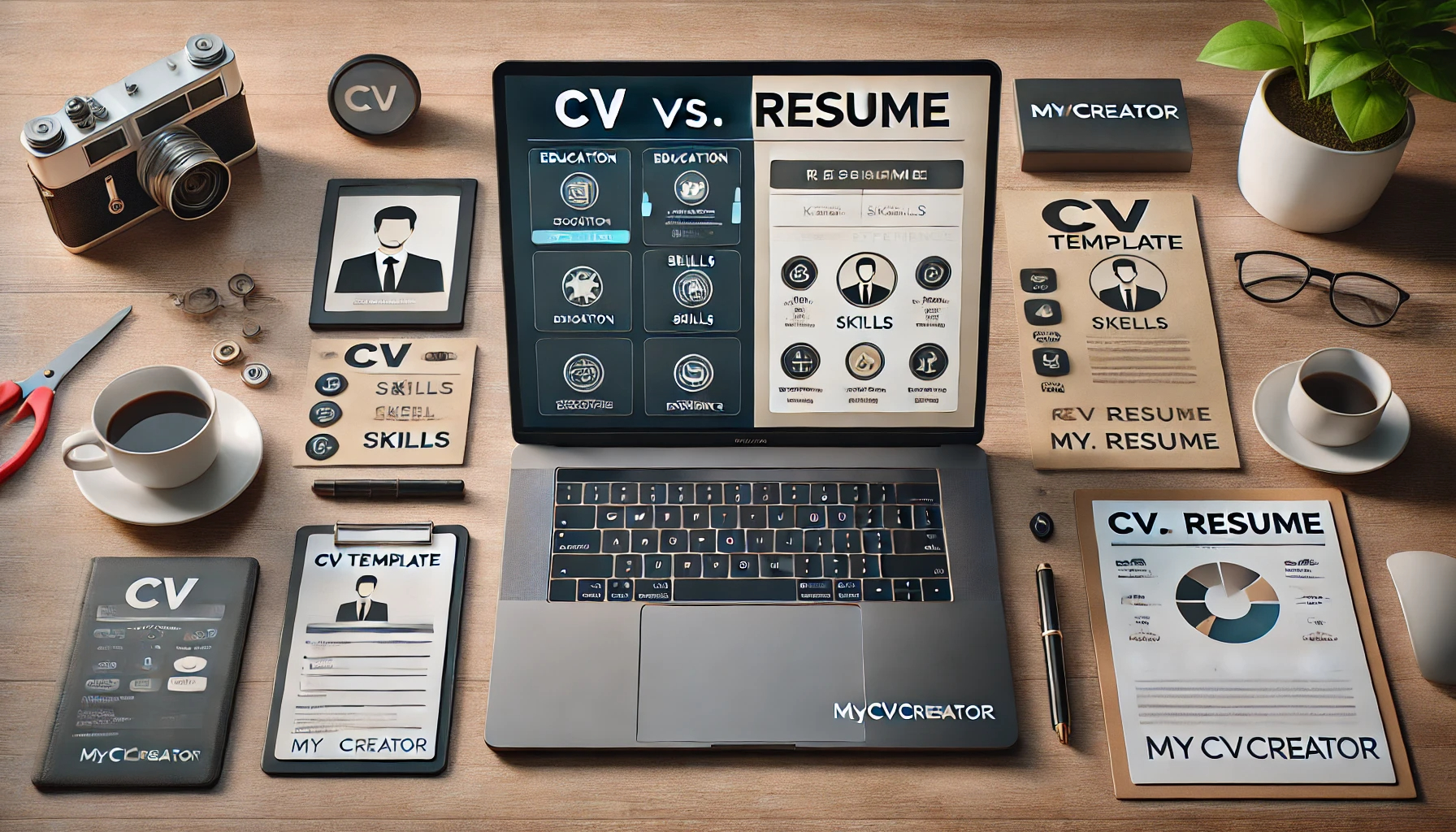
What is the Difference Between a CV and a Resume?
Introduction: CV vs. Resume — Why It Matters More Than Ever
For many job seekers, the terms “CV” (Curriculum Vitae) and “resume” are used interchangeably. Yet, while they may appear similar at first glance, these two documents serve different purposes, follow different standards, and are used in different regions and professions.
Understanding the difference between a CV and a resume can be the difference between a successful application and one that gets overlooked. Whether you’re applying for a corporate position, an academic role, or an international opportunity, knowing when and how to use each is essential for your career success.
What Is a CV?
Curriculum Vitae: Definition and Purpose
The term Curriculum Vitae is Latin for “course of life.” True to its name, a CV is a comprehensive record of your entire professional and academic history. It highlights your education, research, experience, publications, awards, and achievements in detail.
Unlike a resume, which summarizes your qualifications, a CV is exhaustive and chronological, showcasing the full trajectory of your professional development.
Key Characteristics of a CV
-
Length:
A CV is typically two pages or more, depending on the depth of your academic, research, or professional experience. Senior academics and medical professionals often have CVs that span several pages. -
Content:
A CV covers detailed sections such as:-
Education and qualifications
-
Professional and teaching experience
-
Research work and publications
-
Certifications, awards, and grants
-
Professional memberships
-
Languages, skills, and relevant personal interests
-
-
Purpose:
A CV is primarily used for academic, research, scientific, and medical positions, as well as for graduate programs and fellowships.
When to Use a CV
-
When applying for academic or research roles.
-
When submitting applications to graduate schools or fellowships.
-
When seeking employment in countries like the United Kingdom, Europe, New Zealand, or South Africa, where CVs are the standard format.
-
When working in science, medicine, or education, where detailed records of achievements are crucial.
What Is a Resume?
Resume: Definition and Focus
The word “résumé” originates from French, meaning “summary.” As the name implies, a resume is a concise document that presents your skills, achievements, and experiences relevant to a specific job.
It is a targeted snapshot of your professional qualifications, carefully customized to match each position you apply for.
Key Characteristics of a Resume
-
Length:
A resume is usually one page, and only extends to two pages for experienced professionals. -
Content:
Resumes are brief and strategic. They focus on:-
Relevant work experience
-
Achievements and measurable results
-
Core skills and certifications
-
Education (in summary form)
-
Optional: A professional summary or career objective
-
-
Purpose:
A resume is designed for corporate and industry-specific roles where employers need to assess qualifications quickly—such as in business, finance, technology, marketing, or engineering.
When to Use a Resume
-
When applying for corporate or private sector jobs.
-
When job applications specify a “resume” instead of a “CV.”
-
In countries such as the United States, Canada, and Australia, where resumes are standard for most professional roles.
-
When applying online or through Applicant Tracking Systems (ATS) that prefer concise and keyword-optimized documents.
Key Differences Between a CV and a Resume
| Feature | Curriculum Vitae (CV) | Resume |
|---|---|---|
| Length | Multiple pages (2–10) | 1–2 pages |
| Purpose | Comprehensive overview of academic/professional life | Concise summary tailored to a specific job |
| Content | Includes education, research, publications, awards, skills, and academic history | Focuses on work experience, achievements, and relevant skills |
| Tone | Formal, descriptive, and academic | Professional, concise, and results-oriented |
| Flexibility | Static — updated with career growth | Highly customizable — adjusted for each job application |
| Region | Common in UK, Europe, Asia, and academic fields | Common in US, Canada, and private sectors globally |
Regional Differences in Usage
In the United States:
-
Resumes are standard for most professions.
-
CVs are reserved for academic, scientific, and medical positions.
In the United Kingdom and Europe:
-
The term CV is used universally, but these versions are often shorter—more like a resume in American terms.
In Australia, India, and Africa:
-
The terms CV and resume are used interchangeably, though many professionals still use “CV” as the default term.
In the Middle East and Asia:
-
CVs are more common, often including personal details such as nationality, language, and marital status.
How to Choose Between a CV and a Resume
-
Understand the Job Role:
-
Academic or research roles → Use a CV.
-
Corporate or industry-specific jobs → Use a resume.
-
-
Research Regional Norms:
-
In the U.S. or Canada, always use a resume unless otherwise specified.
-
In Europe, Africa, or Asia, a CV is more acceptable.
-
-
Follow Application Instructions:
-
Always adhere to what the employer requests in the job posting.
-
How to Write an Effective CV
1. Include All Key Academic Details
List all degrees, institutions, honors, and scholarships. Add details of teaching roles, research, and publications.
2. Use Clear Formatting
Organize sections with bold headings and bullet points. Keep it professional and easy to scan.
3. Add Supporting Evidence
Include metrics or context for achievements (e.g., “Published 5 peer-reviewed papers in top journals”).
4. Keep It Updated
Update your CV regularly with new accomplishments, publications, and conferences.
How to Write a Winning Resume
1. Customize for Every Job
Tailor your resume to each role by emphasizing the experience most relevant to that position.
2. Keep It Concise
Limit it to one page if possible, focusing on your most recent and impactful achievements.
3. Use Action Verbs and Numbers
Start bullet points with strong verbs (“Led,” “Improved,” “Created”) and quantify results (“Increased sales by 35%”).
4. Optimize for ATS
Use job-related keywords to ensure your resume passes Applicant Tracking Systems and reaches recruiters.
Common Mistakes to Avoid
-
Using the Wrong Format
Sending a CV instead of a resume (or vice versa) can immediately hurt your chances. -
Including Irrelevant Information
Employers don’t need every detail—focus only on what supports the role. -
Poor Design or Formatting
Avoid cluttered layouts, inconsistent fonts, or unprofessional templates. -
Lack of Customization
Generic applications get overlooked. Always tailor your content for the specific job.
Emerging Trends in CVs and Resumes (2025 Update)
1. AI-Enhanced Resumes
Many professionals now use AI resume builders like MyCVCreator.com to generate job-specific resumes with optimized keywords and professional formatting.
2. Interactive Digital CVs
Online CVs with embedded links to portfolios, LinkedIn profiles, or personal websites are becoming more popular among creative and tech professionals.
3. Infographic Resumes
In visual industries such as design, marketing, and media, resumes now feature charts, icons, and visuals to present achievements creatively.
4. LinkedIn as a Career Tool
A polished, keyword-rich LinkedIn profile now complements both resumes and CVs, giving employers a real-time look at your professional brand.
Final Thoughts
The difference between a CV and a resume isn’t just about length—it’s about purpose and audience.
-
A CV offers an extensive view of your career, ideal for academic or research-based roles.
-
A resume is a focused, results-oriented snapshot designed for corporate and private sector positions.
Mastering when and how to use each format will set you apart in the job market, helping you make the best possible impression every time you apply.
Pro Tip: Use MyCVCreator.com to create both ATS-friendly resumes and professional CVs. The platform offers customizable templates, real-time previews, and AI-powered writing assistance to help you stand out globally.
FAQs About CVs and Resumes
1. Are CV and resume the same thing?
No. A CV is a detailed overview of your entire professional life, while a resume summarizes relevant qualifications for a specific job.
2. Can I use a resume for academic positions?
Generally, no. Academic and research roles require a CV to highlight publications, teaching, and scholarly work.
3. How long should a CV be?
There’s no strict limit—it can be as long as necessary to include all relevant experience.
4. How often should I update my resume or CV?
Update your documents every time you gain a new skill, job, or significant achievement.
5. Can I convert my CV into a resume?
Yes. Focus on condensing and customizing only the most relevant sections for the target job.